Implant Restoration Courses: From Foundations to Complex Cases
Choose implant restoration courses for foundational learning, overdentures or complex cases. Build a reading and discussion plan with your dental team.
On this page (12)
Implant restoration is where most long-term implant outcomes are decided, yet it often receives less training time than surgery. This guide sets out a clear learning path.
An implant restoration course should match the kind of educational question you need to answer. Learning basic restorative terminology is different from studying overdenture concepts or discussing a complex implant position. Putting all three into one shopping category can make the choice unnecessarily confusing.
Build your shortlist around the level and scope of the material, then plan how you will review it with the relevant members of your dental team.
Identify your starting point
Write down the parts of an implant restoration discussion you can follow comfortably. Note unfamiliar terms, components and laboratory communication steps. Distinguish between recognizing a word, explaining its role and applying that knowledge within appropriately supervised clinical work.
If the overall implant pathway is new to you, our beginner implant learning guide provides a broader foundation. Restorative learning is easier to organize when you understand how it connects to assessment, planning and aftercare.
Compare three different learning scopes
For foundational study, inspect Implant Restorations 101. Compare its stated content with the vocabulary and workflow questions in your baseline inventory.
For a more focused prosthodontic topic, review Ninja Over-Dentures. Identify what the listing says about its intended audience and subject boundaries. Do not treat it as equivalent to a general implant restoration course simply because both involve prostheses.
For a complex case theme, review Prosthetic Treatment of Malpositioned Implants. The title concerns a specific problem context. A learner should establish the required restorative background before choosing it and should not infer that the approaches discussed are appropriate for every case.
These resources can belong in the same long-term library while serving different immediate objectives.
Build a restoration learning map
Organize your notes under four questions: What is being planned? What information is shared? What is being evaluated? What remains uncertain? Add the chapter or lesson reference beside each answer.
When a course discusses a component or technique, record the context rather than just its name. Ask which information the presenter uses to explain the choice and what alternatives are acknowledged. If the explanation is incomplete, turn that gap into a question for an instructor.
Avoid creating universal rules from isolated demonstrations. A course example is a starting point for learning and discussion, not a patient-specific prescription.
Study with the laboratory perspective in mind
A useful joint session with a technician or restorative colleague can focus on communication. Before viewing, each participant lists the information they expect to receive from the other. After viewing, compare those expectations with the discussion in the teaching material.
Create a shared vocabulary sheet containing the term, its meaning in the lesson and any ambiguity. This makes disagreements easier to discuss. It also helps identify whether a difficulty is conceptual, technical or simply a difference in terminology.
For digital workflow questions, use our digital implant planning study guide. For full-arch education, the All-on-X course checklist helps evaluate the wider syllabus.
Do not stop your reading at delivery
When evaluating a course, check whether it discusses review, maintenance and complications within its stated scope. A resource can legitimately focus on one stage, but you should know which stages require additional study.
The EFP’s peri-implant disease guideline page is an independent starting point for reading about that separate area of professional care. It does not replace the restorative course, and the course does not replace the guideline.
Use a practical completion test
After a study block, try to explain one topic to a colleague without the recording. Identify the source of each major claim and say clearly what you still do not understand. Ask for correction rather than simple agreement.
Should a beginner buy the complex-case course first? A specific problem may be interesting, but the required background should determine the starting point.
Can I compare these courses by video count? Video count helps estimate the quantity of material. It does not show whether the material addresses your learning gap or includes feedback.
Browse Prosthodontics resources and choose the course whose educational role you can describe in one sentence. Add complementary resources only when their purpose is equally clear.
Implant Restoration Learning Path in 6 Steps
- Prosthetic planning: restorative space, emergence profile and occlusion.
- Impressions: open-tray, closed-tray and digital scans for implant restoration.
- Abutments: stock, custom and multi-unit options.
- Screw- versus cement-retained: indications and risks.
- Removable solutions: implant overdentures and attachments.
- Complex cases: malpositioned implants and retreatment.
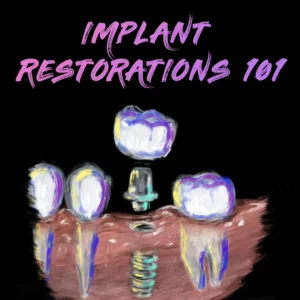
Implant Ninja — Implant Restorations 101
$199.00 · Instant download
Courses for Each Stage
Start with Implant Restorations 101 for single and short-span implant restoration. Then study Ninja Over-Dentures for removable solutions, and Prosthetic Treatment of Malpositioned Implants for difficult cases.

Implant Ninja — Ninja Over-Dentures (57 Videos)
$199.00 · Instant download
Implant Restoration and Long-Term Success
Screw loosening, chipping, peri-implant inflammation and hygiene difficulties are often linked to implant restoration design. A cleanable contour and a passive fit matter as much as aesthetics. Plan every implant restoration with maintenance in mind.
Prosthetic Treatment of Malpositioned Implants — Osteocom
$109.00 · Instant download
Working With the Laboratory
- Send complete records: photographs, shade, occlusal records and scans.
- Agree on materials and screw access before the implant restoration is made.
- Check fit, contacts and occlusion carefully at delivery.
A 6-Week Study Plan
- Weeks 1–2: planning, impressions and abutments.
- Weeks 3–4: single and multiple implant restoration.
- Weeks 5–6: overdentures and complex retreatment.
Review each implant restoration you deliver against the protocols you studied, and photograph it at follow-up visits.
Frequently Asked Questions
Should a surgeon learn implant restoration?
Yes. Understanding implant restoration helps surgeons place implants where they can be restored well.
Screw-retained or cement-retained?
Both have indications. Many clinicians prefer screw retention for retrievability; the choice depends on implant position and aesthetics.
Where can I find guidelines?
The ITI publishes treatment guides on implant restoration. See also our prosthodontics collection.
Continue learning
All Prosthodontics resources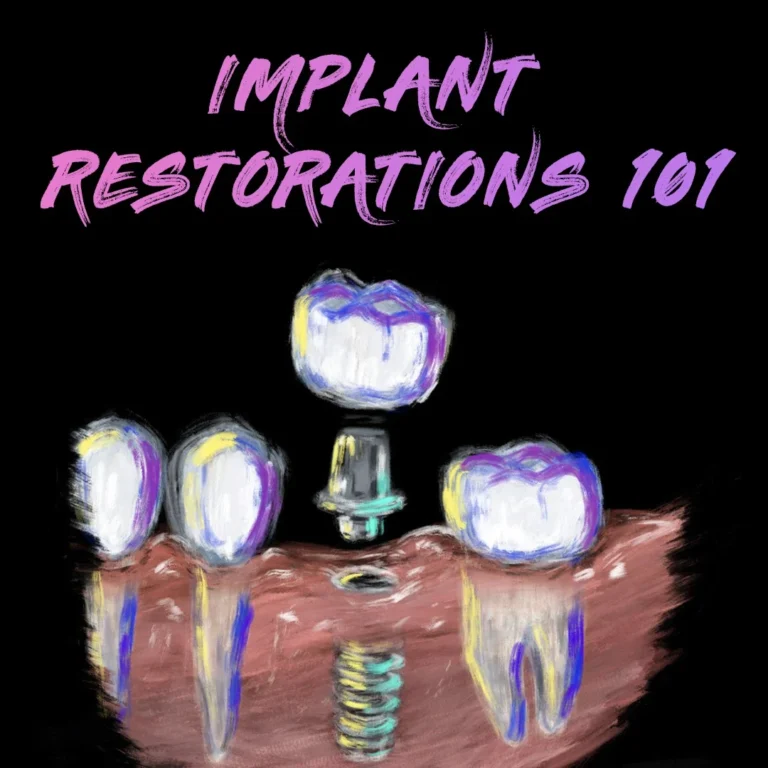
$199.00 $2,000.00Original price: $2,000.00

$199.00 $2,000.00Original price: $2,000.00
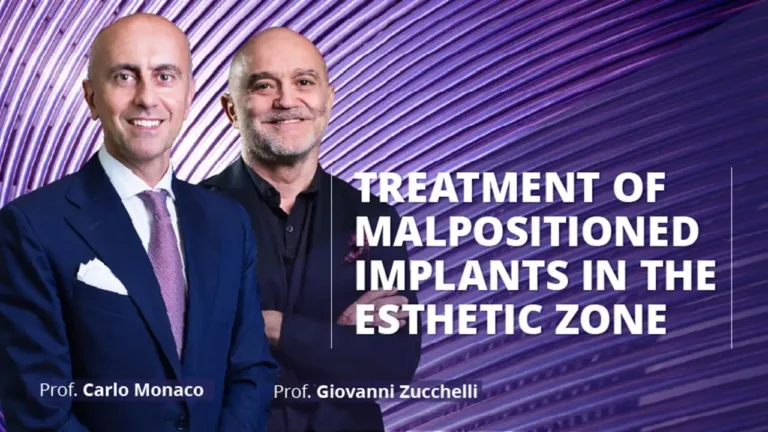
$109.00 $420.00Original price: $420.00
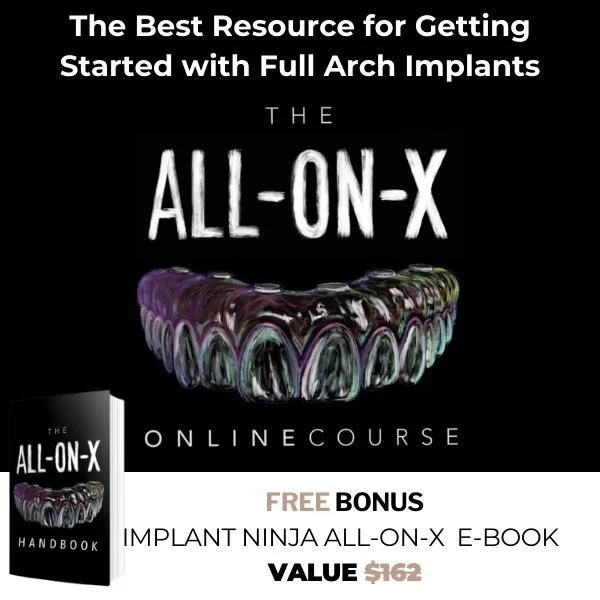
$199.00 $1,000.00Original price: $1,000.00