Adaptability for Dentists: A Practical Plan for Handling Change
New systems, new owners and departing colleagues all test how you respond. Here is a practical way for dentists to sort a change, try small adjustments and stay steady for the team.
On this page (9)
In short
- Sort any change into fixed, flexible and unknown parts before you react.
- Test new ways of working in small, time-limited trials.
- Keep your standards steady while your methods move.
- State a concern once, clearly, to the person who can act on it.
Adaptability for dentists rarely begins with a grand decision. It begins on an ordinary Tuesday, when the practice software changes overnight, a trusted colleague hands in their notice, or a new owner asks everyone to work differently. You still have a full day ahead, and people are looking to you to set the tone.
Change at work can feel like a test of character, but it behaves more like a skill. This article treats adaptability for dentists that way. You will find a method for sorting what is happening, a short set of moves for your next disruption, and some language for the conversations that come with it.
What adaptability for dentists actually means
Adaptability for dentists is not cheerfulness about every new idea. You can dislike a decision and still respond to it well. In practical terms, it means noticing that the old way no longer fits, then adjusting how you think and act without dropping your standards.
Psychologists use a related idea called cognitive flexibility. It describes carrying your thinking from familiar situations into new ones, and overcoming a habitual response when a new situation calls for it. That second part matters in a dental practice, where habit is usually a strength.
$19.00 · Instant download
Sort the change before you react
Much of the strain in a change comes from treating it as one big thing. A new scheduling system is really several smaller things: a different screen, a different morning routine for the front desk, and a few weeks of slower lookups. Some of those are permanent. Others will pass.
Try sorting any change into three columns on a sheet of paper:
- Fixed: the parts you cannot influence, such as a decision already made by the owner or a rule set by a regulator.
- Flexible: the parts where you have a say, such as how the team trains or when the new process starts.
- Unknown: the parts nobody can answer yet, which need a question rather than a worry.
The exercise tends to shrink the problem and shows you where to spend your energy. If you are arguing with something in the fixed column, you have found a place to stop. If something sits in the unknown column, you have found your next question for the practice manager.
Seven moves for your next disruption
Adaptability for dentists does not call for a new personality. It calls for a repeatable sequence. These seven moves work for a small shift, like a new way of confirming appointments, and for a larger one, like joining a different practice.
- Name it plainly. Say what is changing in one sentence, without commentary.
- Sort it. Use the fixed, flexible and unknown columns above.
- Find the purpose. Ask what problem the change is meant to solve, even if you disagree with the answer.
- Protect one anchor. Keep one familiar routine steady, such as your morning huddle or your end-of-day notes.
- Run a small trial. Test the new way for a week with one person or one session before judging it.
- Ask for feedback early. Invite the people closest to the work to tell you what is breaking.
- Review and adjust. Set a date to decide what stays, what changes and what you raise with leadership.
Look again at the fifth move. A small trial lowers the stakes for everybody. “Let’s try it for a week and then talk” is far easier to hear than “this is how we do it now.” It also gives you real information in place of opinions.
$19.00 · Instant download
Practise on the running-late day
Adaptability for dentists gets tested long before any restructure. A running-late schedule will do. Someone arrives early, an appointment overruns, and the plan you made at eight o’clock no longer describes the afternoon.
A flexible response starts with a short pause and one clear message. Tell the front desk where you are and what you need, then decide what can move. A colleague who hears “we’re running behind, please let the next patient know” can act. A colleague who only sees you rushing cannot.
Separating the method from the standard helps here. The order of the afternoon can change. The way you speak to people and the care you take with your work stay the same. That distinction sits at the heart of adaptability for dentists: methods can move while values hold.
Watch for the habits that hold you back
Experience can make adaptability for dentists harder in one particular way. The more often a routine has worked, the less reason you have to question it. A few patterns are worth catching early:
- Comparing every step with the old system out loud, in front of the team.
- Quietly keeping a private workaround while everyone else learns the new process.
- Waiting for the change to fail so you can feel justified.
- Carrying the whole learning curve alone instead of asking the colleague who picked it up first.
None of these make you difficult. They are normal ways of protecting your competence. When you catch one, try a simple prompt: what would I do here if I were new to this practice? Curiosity usually gets you moving again, and your daily habits can carry that prompt into an ordinary week.
$19.00 · Instant download
Talk about change without losing the team
Adaptability for dentists also shows in what you say. A few phrases help in a huddle or a one-to-one:
- “This is going to feel slower for a couple of weeks. That’s expected.”
- “I don’t have the answer yet. I’ll find out by Thursday.”
- “What’s the one thing about this that’s making your day harder?”
- “I raised a concern about this, and here’s what I heard back.”
That last line matters when you disagree with a decision. Adaptability for dentists does not mean silence. You can state a concern once, clearly and privately, to the person who can act on it. After that, you can support the decision in front of the team or start looking for a better fit. Both are honest choices.
For the harder versions of that talk, read our guide to difficult conversations.
When the change is your own idea
Not all change arrives from outside. Sometimes you are the one who wants something different: a new role, fewer days, or a move toward teaching or leadership. The same skills apply, though the feelings can be less comfortable because nobody else made the decision.
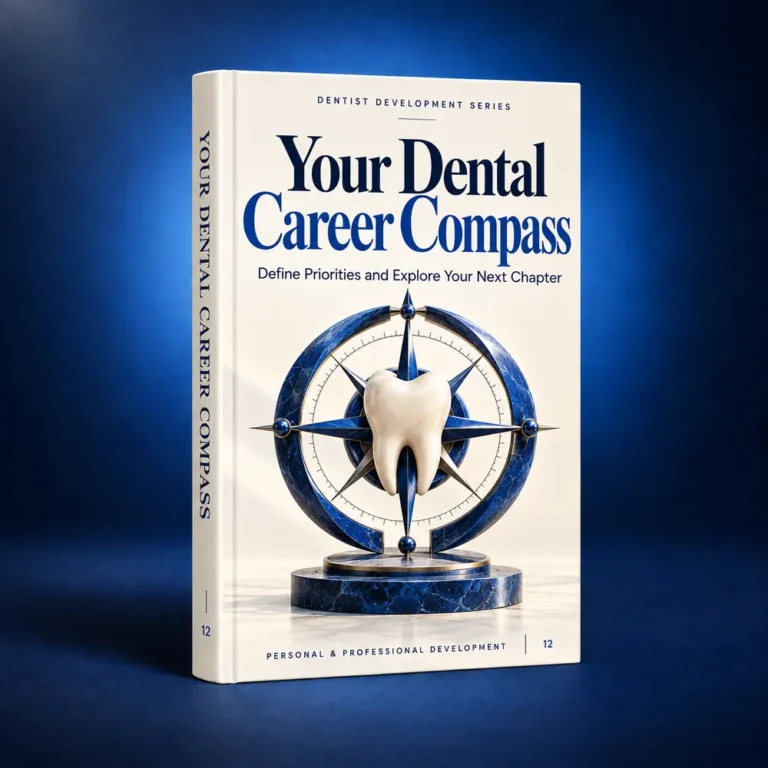
Small experiments support adaptability for dentists here too. Before you reshape a whole career, spend an hour with someone already doing the work you are curious about, or take on one short project. If a bigger question is forming, Your Dental Career Compass is an ebook about defining your priorities and exploring your next chapter.
Major change can bring a lot of stress. If a transition is weighing on you, please consider speaking with a qualified professional. Asking for that kind of support is a sensible step.
Build adaptability for dentists into a normal month
You can rehearse adaptability for dentists when nothing is urgent. Choose one low-stakes routine this month and change it on purpose. Reorganise how you close the day, swap the order of your huddle, or ask a colleague to show you how they handle a task you have done the same way for years.
These rehearsals leave you with a record of times you coped with not knowing yet. That record is useful when a bigger change lands. Seen this way, adaptability for dentists is built in ordinary weeks, long before anyone needs it.
Your next step
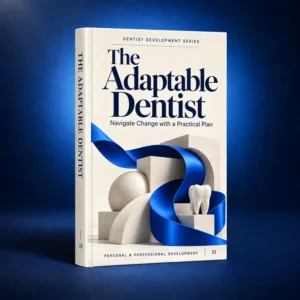
Pick one change happening around you right now and sort it into fixed, flexible and unknown today. If you would like a more structured way to keep going, The Adaptable Dentist is our ebook on navigating change with a practical plan.
Continue learning
All Confidence & Mindset resources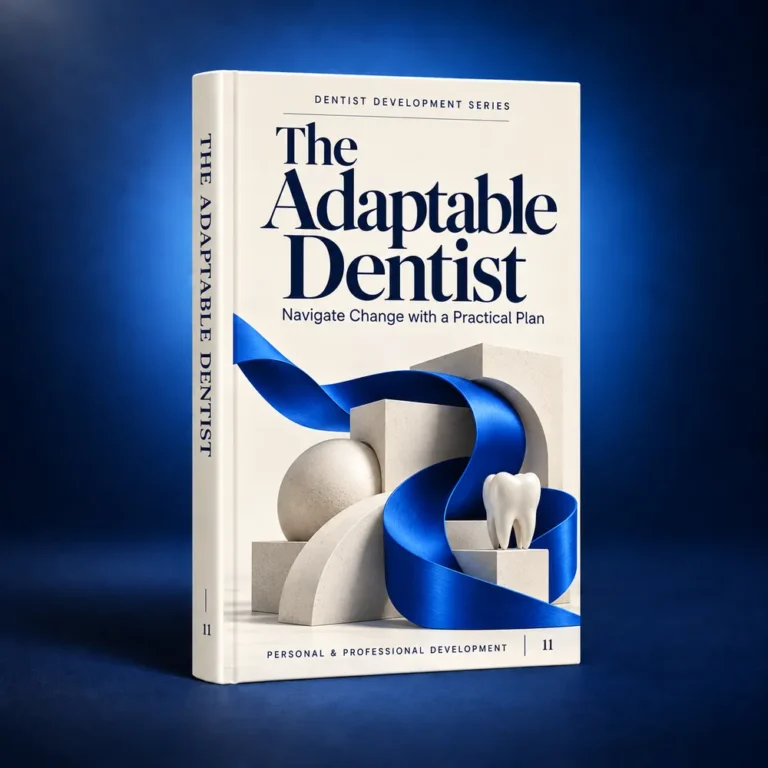
$19.00
$19.00
$19.00
$19.00