Decision Making for Dentists: Choose with a Clear Head
Job offers, team changes, new commitments: the big nonclinical choices rarely come with a clear answer. These six questions help dentists slow down, weigh what matters and decide with fewer regrets.

On this page (6)
In short
- Sort decisions by how reversible they are.
- Write down what you are really choosing between.
- Separate your values from other people's expectations.
- Set a deadline, then let the decision rest.
Decision making for dentists is usually discussed as part of chairside work, yet some of the hardest choices you face have nothing to do with it. Should you accept the associate role in another city? Do you say yes to the committee seat? Is it time to have that talk with a team member, or to leave a practice that no longer suits you?
This side of decision making for dentists rarely comes with a clear protocol. It involves people, values and uncertainty, and it tends to arrive at the worst moment. This article stays entirely in that nonclinical territory and offers six questions you can use the next time a career or workplace choice keeps you awake.
Why nonclinical decision making for dentists feels so heavy
Your training rewards speed and certainty. All day, you take in information, reach a conclusion and move on. Career and team questions do not work like that. The information is incomplete, the outcome may take years to show itself, and other people have opinions about what you should do.
Timing matters too. Wikipedia describes decision fatigue as the declining quality of decisions after a long session of decision making, though it also notes that the research behind the idea is debated. Whatever the science finally shows, you may recognize the everyday version: agreeing to something at 6 p.m. simply to end the conversation.
A practical rule of decision making for dentists is to protect your bigger choices from the end of a long day. Give them their own slot, with a notebook and a clear head.
$19.00 · Instant download
Six questions for better decision making for dentists
Work through these in order, on paper if you can. Writing slows your thinking down just enough to expose gaps you would miss in your head.
Question 1: What am I really deciding? Name it in one sentence. “Should I leave?” may actually be “How do I get more autonomy?” or “Can this working relationship be repaired?” A clearer question often opens up options you had not considered.
Question 2: How reversible is this? Some choices are easy to undo, such as trying a new huddle format for a month. Others are not, such as signing a long-term commitment. Move quickly on the first kind and spend your care on the second.
Question 3: What do I value here? List the two or three things that matter most in this choice: time with family, autonomy, mentorship, stability, a particular kind of team. Then ask which option honors them best. Our guide to reflective practice can help if your values feel hazy right now.
Question 4: What facts am I missing? Separate what you know from what you are assuming. You might assume a partner would say no, or that a new role means longer hours. Find out. A single honest conversation can settle what weeks of private worrying cannot.
Question 5: Whose voice is this? Notice which reasons belong to you and which come from a parent, a mentor or the colleague who always knows best. Good advice is welcome, but you are the one living with the outcome. Ask for input, then decide for yourself.
Question 6: What would I regret least? Picture yourself a few years from now, looking back at each option. This is not a prediction. It is simply a way of stepping back from today’s stress and seeing which choice you could stand behind, even if things go badly.
A worked example: the offer on a busy Tuesday
Imagine a practice owner offers you more responsibility during a running-late afternoon, and asks for an answer by Friday. The first impulse is to say yes because it feels flattering, or no because you are tired. Neither reaction is really a decision.
Here is how this approach to decision making for dentists might shape your week:
- You realize the real question is whether you want to lead people, not whether you want the title.
- You see that it could be a six-month trial, which makes it more reversible.
- You notice autonomy matters to you more than status.
- You ask the owner what the role involves day to day, since you had been assuming.
- You separate your own interest from a mentor’s advice to always say yes.
- You reach Friday with a clear answer, whichever way it goes.
No approach to decision making for dentists guarantees the right outcome. It does mean the choice was truly yours, and that you can explain your reasoning to yourself and to others.
$19.00 · Instant download
Habits that make hard choices easier
A good process depends on the conditions around it. A few small habits will do more for decision making for dentists than any clever framework:
- Give yourself a deadline. Open-ended thinking turns into rumination. Choose a date and keep it.
- Use a sounding board. Ask one trusted person to question your reasoning instead of telling you what to do.
- Ask for time. “Let me think about that and come back to you tomorrow” is a complete, professional answer.
- Keep a decision log. Record what you chose and why. Reading it later teaches you more than memory will.
That log is especially useful. Memory tends to rewrite our reasoning once the outcome is known. A short note lets you judge the process by what you knew at the time, not by how things happened to turn out.
When the choice involves other people
Many hard calls in dentistry affect a team. If you are deciding how to change a schedule or address a recurring problem, sound decision making for dentists includes thinking about who should be in the room. People accept outcomes more readily when they have had a real chance to be heard.
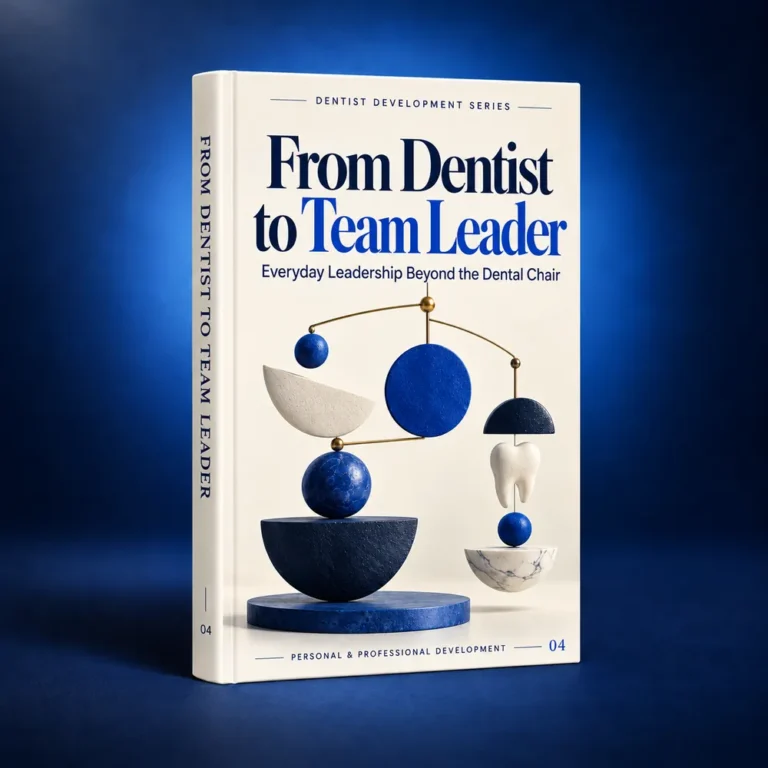
Be clear from the start about how the decision will be made. Are you asking for input and deciding yourself, or do you want the team to decide together? Mixed signals here cause more frustration than the decision itself. Our article on leadership skills goes further on this, and the ebook From Dentist to Team Leader follows the same theme.
Good decision making for dentists also means knowing when to ask for help. For choices with legal or financial consequences, such as a contract, bring in a qualified adviser. If a decision is weighing on you heavily or affecting your wellbeing, talking with a qualified professional can be a sensible step.
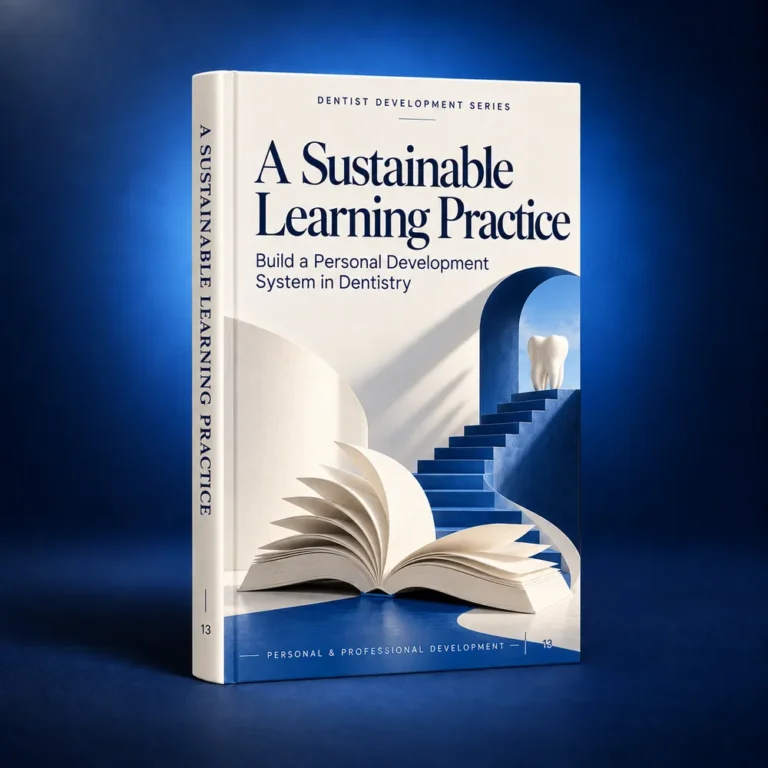
A Sustainable Learning Practice
$19.00 · Instant download
Your next step: put one decision on paper
Pick one open question you have been carrying around. Write it in a single sentence at the top of a page, and answer the six questions over a quiet twenty minutes this week. You may not reach a final answer, but you will know what is actually in the way.
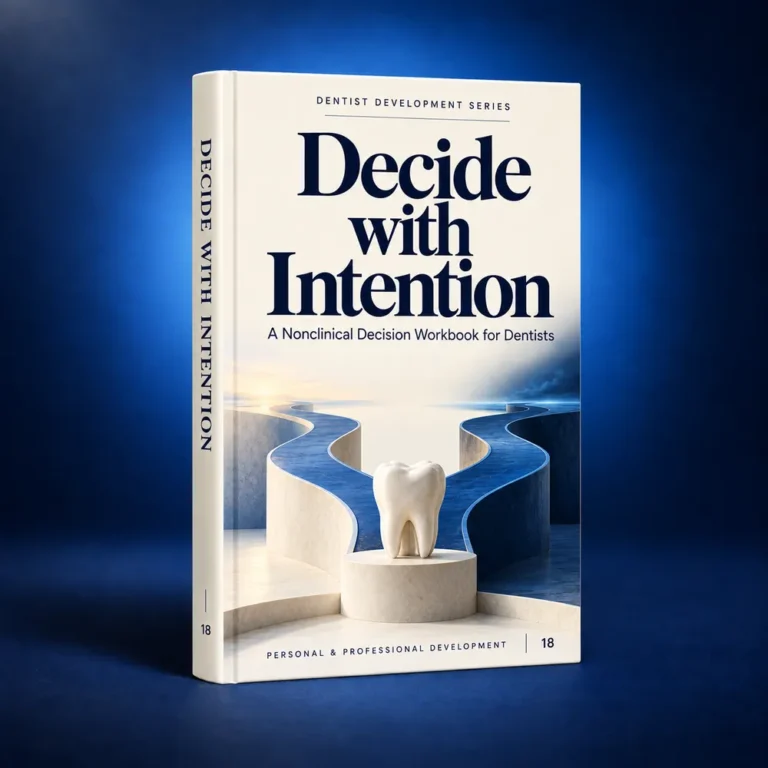
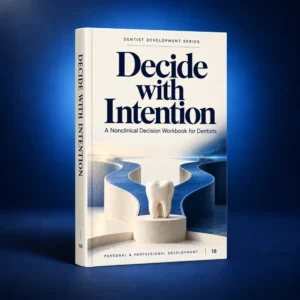
If you want more support, the ebook Decide with Intention: A Nonclinical Decision Workbook for Dentists is built around this kind of thoughtful, nonclinical decision making for dentists. It is a PDF you can return to whenever a new crossroads appears.