Networking for Dentists: Build Relationships That Last
Good professional relationships rarely start with a sales pitch. These five quiet habits help dentists meet people, stay in touch and offer something useful, even if events feel uncomfortable.
On this page (7)
In short
- Aim for a few real relationships, not a stack of contacts.
- Offer something useful before you ask for anything.
- A short follow-up matters more than a perfect first impression.
- Quieter settings count, especially if big rooms drain you.
Networking for dentists has an image problem. Many of us picture name badges, forced small talk and someone working the room with a stack of business cards. So we skip the reception, head back to the hotel and tell ourselves we will do it next year.
There is a better way to look at networking for dentists. A professional network is just a group of people who know you, trust you and are glad to hear from you. You already have the beginnings of one, and growing it depends far more on small, repeated habits than on charm.
Why networking for dentists matters in your career
Dentistry can be oddly isolating. You may spend the whole day with people yet rarely talk to another dentist about the work itself. When a difficult question comes up about a job, a team problem or a next step, it helps to know who you can call.
Networking for dentists also shapes opportunity. An ADA New Dentist Blog post on finding a job notes that word of mouth carries real weight in dentistry and encourages readers to treat their contacts as a valuable resource. That does not mean every coffee should have an agenda. It means the people you know are part of your working life, so they deserve some care.
$19.00 · Instant download
Five habits that make networking for dentists feel natural
Networking for dentists does not require a new personality. Each habit below is small enough to try in an ordinary month, and none of them requires you to enjoy crowded rooms.
Habit 1: Set a small target. Before a meeting or study club, decide to have one good conversation. Just one. Most people find this far less daunting than trying to meet everybody, and a single proper exchange is usually more memorable than ten quick handshakes.
Habit 2: Lead with curiosity. Ask what someone is working on, what surprised them this year, or how they ended up in their current role. Then listen to the answer. Real interest is easy to spot, and it takes the pressure off you to be impressive.
Habit 3: Follow up within a week. A short message is enough. Mention something you talked about and leave it there, with no request attached. This one step separates a pleasant chat from the start of a relationship, and few people bother with it.
Habit 4: Be useful first. Pass along an article, recommend a good speaker, or introduce two colleagues who should know each other. Small favors cost little and build goodwill. When you do need help later, you will not be asking a stranger.
Habit 5: Keep a simple record. A note in your phone or a basic spreadsheet will do. Write down who you met, where, and one thing they mentioned. A glance before your next meeting makes it easy to ask how the new role or the move went.
Where networking for dentists actually happens
The ADA post points readers toward dental society, alumni and continuing education meetings, as well as community and volunteer events. It also suggests asking your state or local dental society about mentorship programs and new dentist committees. Those are solid starting points, because everyone attending already has something in common.
Look a little closer to home as well. Some of the most useful connections are easy to overlook:
- Former classmates you have not spoken to in a few years.
- Colleagues at nearby practices you only know by name.
- Former supervisors or teachers who remember your early work.
- Hygienists, assistants and office managers, who often know the local dental community well.
- Speakers at local events, who usually welcome a thoughtful question afterward.
Choose one or two of these and go regularly. In networking for dentists, showing up repeatedly to a small group works better than attending one huge event a year, because people need to see you more than once before they get to know you.

$19.00 · Instant download
Networking for dentists who dislike networking
If you are introverted or simply tired by the end of a long clinic day, you are not doing anything wrong. Big rooms do not suit everyone. Build your approach around the settings where you feel most like yourself.
- Invite one colleague for coffee instead of attending a reception.
- Arrive early, when the room is quiet and conversations are easier to start.
- Volunteer for a small job at an event, since a role gives you a reason to talk to people.
- Send a thoughtful message online if meeting in person is hard to arrange.
Prepare one or two opening questions in advance, then let go of the script. Remember that many people in the room feel just as awkward as you do. If nerves tend to hold you back in professional settings, our article on confidence may help you take the first step.
What to say when you do need something
Sooner or later you will want advice, an introduction or a recommendation. Asking is fine. Good relationships can carry a clear, respectful request, as long as you make it easy for the other person to say no.
Keep the message short and specific. Explain what you are hoping to learn, why you thought of them, and how little time you need. For instance, you might ask for fifteen minutes to hear how they approached moving from an associate role to a leadership role, instead of asking them to find you a job.
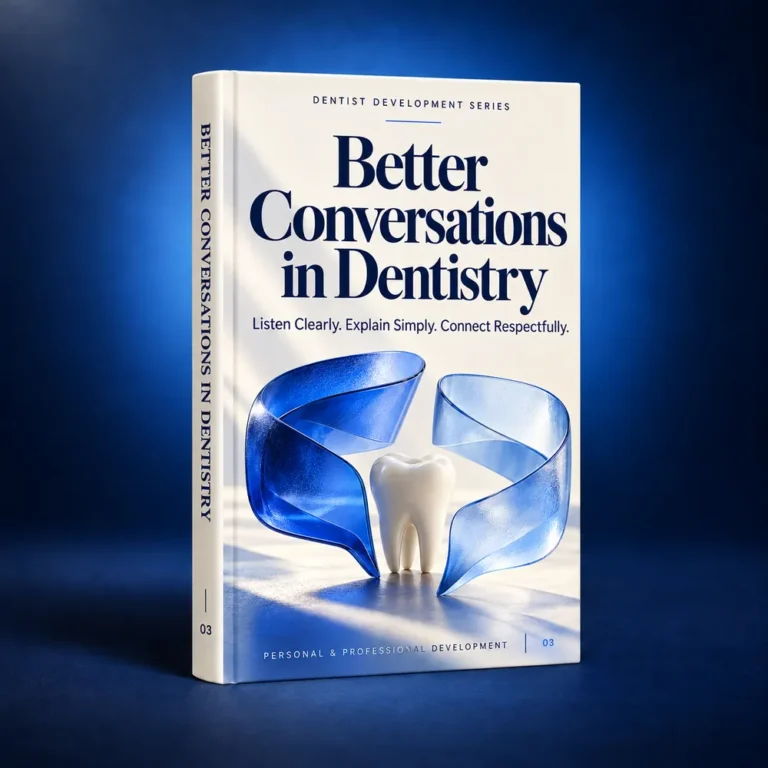
Afterward, say thank you and let them know what happened next. People like to hear how a story ends. It also keeps the door open, and it turns a single favor into an ongoing connection. The article on communication skills offers more ideas for those conversations, and the ebook Better Conversations in Dentistry stays on the same theme.

A Sustainable Learning Practice
$19.00 · Instant download
How to keep your network alive in a busy schedule
The hard part of networking for dentists is rarely meeting people. It is staying in touch once the schedule fills up again. A little structure solves most of this, because you stop relying on memory and good intentions.
Try setting aside fifteen minutes on the same day each month. Send two short messages to people you have not spoken to lately. Congratulate someone on a new role, share something you read, or simply ask how they are doing.
Be honest about limits as well. You cannot stay close to everyone, and networking for dentists should never become a second job. A handful of relationships you actually maintain will serve you better than hundreds of contacts you never speak to.
Your next step: send one message today
Think of one person you enjoyed working with or learning from and have not contacted in a while. Send them a few friendly lines this afternoon. No request, no agenda, just a hello and one specific memory.
If you would like to explore this further, the ebook Connections with Purpose: Thoughtful Networking for Dental Professionals looks at networking for dentists as a thoughtful, long-term practice. It may suit you if you want relationships built on care and not on self-promotion.
Continue learning
All Career Growth resources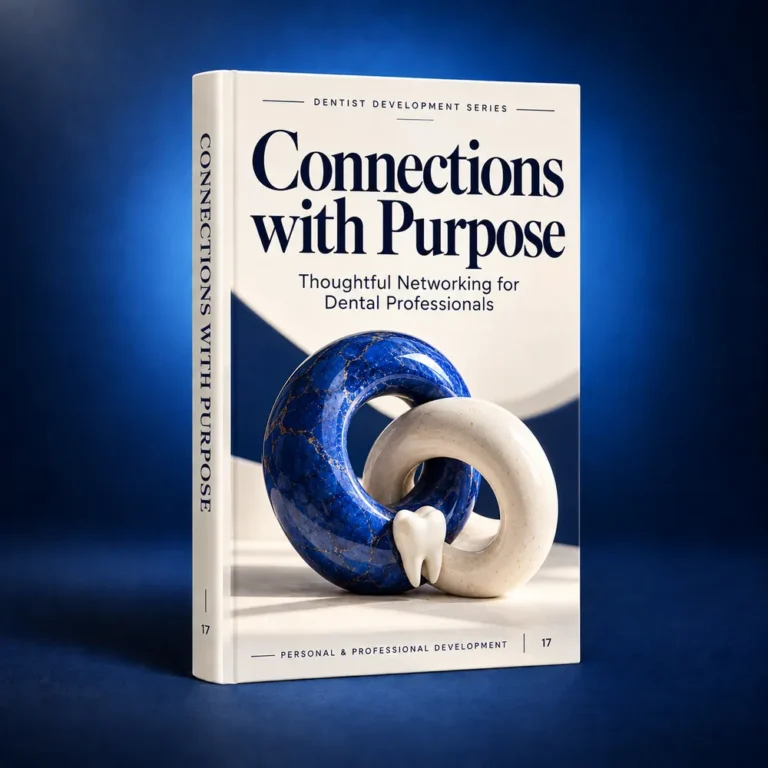
$19.00

$19.00