Leadership Skills for Dentists: Leading Beyond the Chair
You can lead without a title. These six everyday habits help dentists set clear expectations, invite honest input and build the trust that keeps a dental team working well.

On this page (10)
In short
- Leading is a different job from doing, and it needs its own habits.
- Clear expectations prevent many of the frustrations that look like attitude problems.
- Teams speak up when they believe honesty will not be punished.
- How you respond to the first piece of bad news sets the tone for the next one.
Few dentists plan on becoming managers, yet leadership skills for dentists are needed from surprisingly early on. The moment a nurse looks to you for a decision, or a colleague asks what you would do, you are leading. Dental training prepares you thoroughly for your work with patients. It says far less about what to do when two team members stop speaking to each other.
You do not need a title, a practice of your own or a commanding personality to begin building leadership skills for dentists. Leadership is mostly a set of small, repeated behaviours. This guide covers six of them, along with the shift in thinking that makes them possible.
From Doing the Work to Leading the Work
Being good at dentistry and being good at leading are separate abilities. The first relies on your own hands, knowledge and judgement. The second relies on how well other people can do their best work when you are not watching.
That shift can feel strange. You may have built your identity on being the person who gets things right, so stepping back to let someone else try can feel like slacking. In truth, it is the new job. Leadership skills for dentists begin with accepting that your success now depends partly on others.
Think of a good team huddle. Nobody is seeing a patient, and yet the rest of the day may run better because of it. That is the kind of invisible work leading involves.
$19.00 · Instant download
Habit 1: Make Expectations Painfully Clear
Many problems that look like attitude are really confusion. A team member cannot meet a standard that lives only in your head. Before you get frustrated, ask whether you ever said out loud what good looks like.
Clear expectations answer a few plain questions:
- What exactly needs to happen?
- Who owns it?
- By when?
- What should they do if something gets in the way?
Among all the leadership skills for dentists, this one is probably the cheapest to learn. It costs a few extra minutes of explanation and saves many awkward conversations later.
Habit 2: Build Psychological Safety in Your Team
Psychological safety is the belief that speaking up with ideas, questions, concerns or mistakes will not lead to punishment or humiliation. Amy Edmondson’s work describes it as a shared belief within a team, and it depends heavily on how leaders behave.
In a dental setting, this matters in very practical ways. You want the newest team member to tell you when something looks wrong, or when they did not understand your instruction. If speaking up feels risky, people stay quiet, and you lose information you badly need.
You can build this with simple actions. Ask, “What am I missing?” and wait for the answer. Admit your own mistakes in plain words. Thank the person who raised an awkward point, even if the timing was inconvenient. Leadership skills for dentists are often most visible in these unglamorous moments.

$19.00 · Instant download
Habit 3: Respond Well to Bad News
Your reaction to the first piece of bad news teaches the team what to do with the second. If you sigh, snap or look for someone to blame, people quickly learn to hide problems from you. Few leaders intend that, but a stressful afternoon can make it happen.
Practise a steady first response. “Thanks for telling me” is a good start, and it costs nothing. Then ask what happened, what is needed now and what could be learned afterwards. Keep those questions in that order, because fixing comes before reviewing.
Accountability still matters, and this approach does not remove it. It simply separates the problem from the person long enough for an honest discussion. Strong leadership skills for dentists include holding high standards while keeping your temper.
Habit 4: Delegate the Outcome, Not Just the Task
Handing over a task and then checking every step is not really delegating. It trains people to wait for you. Over time, you become the bottleneck for decisions that others could easily make.
Try sharing the purpose as well as the task. Explain what a good result looks like, agree when you will check in and then step back. Allow room for someone to do it differently from you, as long as the result is sound. Our guide to delegation for dentists offers more on this, and Delegate with Clarity is an ebook on the same theme.
$19.00 · Instant download
Habit 5: Have the Conversation Sooner
Avoiding a tense staff conversation feels kind in the moment. Usually, it is not. The issue grows, resentment spreads through the team and the eventual talk is far harder than it needed to be.
Developing leadership skills for dentists means raising small concerns while they are still small. Keep it private and specific. Describe what you saw, ask for the other person’s view and agree what happens next.
- “I noticed the last two handovers were rushed. What is getting in the way?”
- “I would like us to sort this out together. What do you need from me?”
- “Let us check in on Friday and see how it is going.”
Speaking early also shows the rest of the team that standards apply to everyone. That sense of fairness is a large part of why people trust a leader.
Habit 6: Make Time for One-to-One Check-Ins
Busy practices tend to talk only when something has gone wrong. A short, regular check-in changes that pattern. It gives team members a dependable moment to raise ideas before they become complaints.
Regular check-ins are among the quieter leadership skills for dentists. Ask what is going well, what is getting in the way and how you can help. Then follow through on what you promised, because nothing damages trust faster than a question that leads nowhere. If you are an associate without formal responsibility, you can still offer this kind of attention to a nurse or trainee you work with regularly.
Leadership Skills for Dentists Without a Title
Associates sometimes assume that leading belongs to the owner. It does not. You influence the team every time you greet a colleague, respond to stress or share credit in front of others.
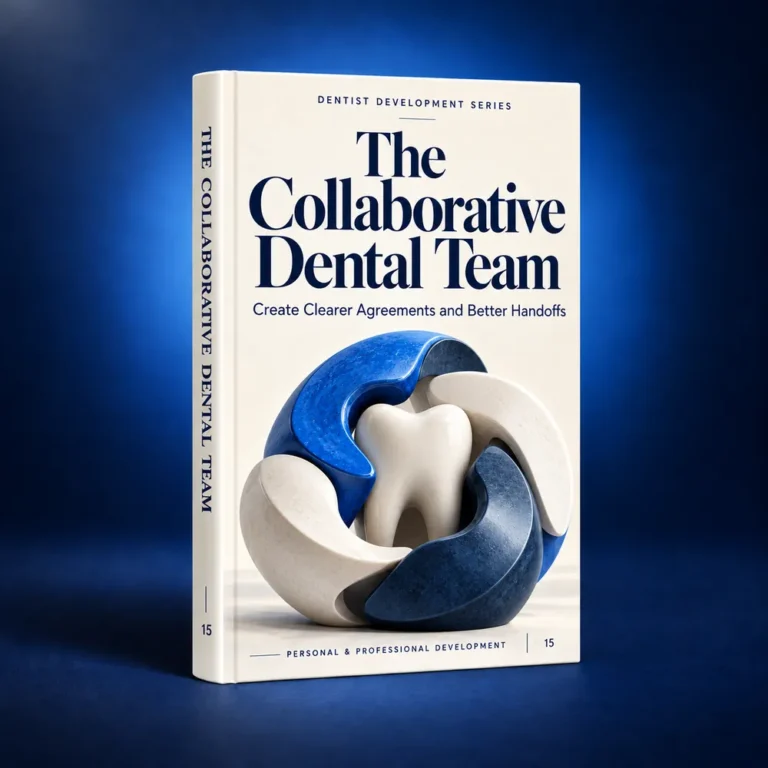
Practising leadership skills for dentists before you hold any formal role is a real advantage. You can volunteer to run a huddle, mentor a newer colleague or suggest one small improvement to a shared process. Each of these is low risk, and each teaches you something. Our article on dental team collaboration offers further ideas for working well across roles.
Think of leadership skills for dentists as ordinary skills, available to anyone willing to practise them. If you are thinking about your longer path, career planning for dentists can help you decide what kind of leader you would like to become.
Look After the Person Doing the Leading
Practising leadership skills for dentists can be lonely, especially when you are the one everyone brings their problems to. Find at least one peer outside your workplace who understands the role. A conversation with them can stop small worries from growing overnight.
If the pressure of leading starts to feel heavy for a long stretch, consider speaking to a qualified professional. Asking for support is a sensible part of the job, and it sets a good example for your team.
Your Next Step: Choose One Habit
Pick one habit for the next two weeks, and tell a colleague which one you chose. Saying it aloud makes you more likely to follow through. Leadership skills for dentists grow through this kind of small, visible practice.
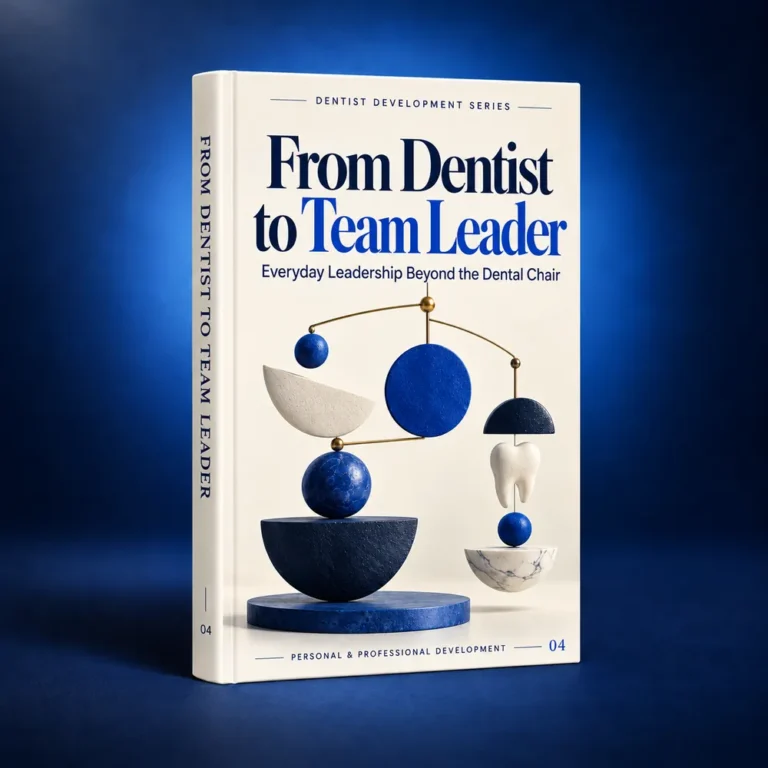
For a companion on that path, explore From Dentist to Team Leader: Everyday Leadership Beyond the Dental Chair, our PDF ebook on the everyday side of leading a dental team.