Reflective Practice for Dentists: Learn More From Your Ordinary Days
A tense phone call or an awkward team meeting can teach you a great deal if you look back at it properly. Here is a plain way to reflect on your working day without sliding into self-criticism.

On this page (9)
In short
- Replaying a bad moment is different from learning from it: reflection ends with a next action.
- Six plain questions can take you from what happened to what you will try next.
- Five minutes in a private notebook is enough, as long as you keep patient details out of it.
- Look at good days as well as difficult ones.
Reflective practice for dentists means pausing to look honestly at something that happened at work and asking what it can teach you. You probably do a rough version already on the drive home, replaying a tense conversation or a meeting that went sideways. What is usually missing is a simple structure. This guide offers one, using everyday situations from outside the chair.
Replaying a moment is not the same as reflecting on it
Replaying feels productive, but it tends to run in circles. You hear your own words again, wince and think of a better reply three hours too late. By bedtime you have spent a lot of energy and changed nothing.
Reflection has a different shape, because it moves forward and stops somewhere useful. A quick comparison shows where reflective practice for dentists differs from simply replaying a moment:
- Replaying asks “why did I say that?” Reflecting asks “what was going on for me at that moment?”
- Replaying judges you as a person. Reflecting looks at one event.
- Replaying has no ending. Reflecting ends with something you will try next time.
If you notice yourself in the first column, you do not need to scold yourself. Just change the question.
$19.00 · Instant download
What reflective practice for dentists actually means
In broad terms, reflective practice is the ability to think about your own thoughts, emotions, actions, decisions, assumptions and professional experiences so that you can improve. Notice how wide that list is. It covers far more than technical skill, which is why it suits questions of leadership, teamwork and communication so well.
That width is the main appeal of reflective practice for dentists. A lot of what makes a working week hard has little to do with the work on the tray. It lives in how you handled a colleague, how you ran a meeting or what you assumed about someone before they had finished speaking.
Looking back and thinking on your feet
The educator Donald Schön separated two kinds of reflection. Reflection-on-action means looking back at something after it has happened. Reflection-in-action means paying attention to what you are doing while you are still doing it.
Most people begin reflective practice for dentists with the first kind, and that is sensible. Say you run a team meeting and realise afterwards that only two people spoke. Looking back, you might decide to ask a question and wait longer next time.
With practice, the second kind begins to appear. You notice in the room that the team has gone quiet, and you stop talking and ask what they think. Nobody needs to see this happening. It simply means the lesson has moved from your notebook into the moment itself.
$19.00 · Instant download
Six questions that make reflective practice for dentists concrete
Graham Gibbs proposed a structured way of debriefing experience, now often simplified to six stages. Here they are as plain questions. Imagine you corrected a receptionist about a booking mistake in front of a full waiting room, and she has been quiet ever since.
- What happened? Stick to the facts. You spoke to her at the desk, others could hear, and she went silent.
- What was I feeling? Perhaps you were behind schedule and irritated, and perhaps embarrassed about the mix-up.
- What was good and bad about it? The booking got fixed, but she may have felt shown up in public.
- Why did it go that way? Time pressure pushed you towards speed, and you skipped the question of where to have the conversation.
- What have I learned? Corrections can usually wait ten minutes and travel better in private.
- What will I do next? Apologise for the setting today, and use a quiet word in the office from now on.
The last question matters most. An answer that names a real action, with a time attached, is what separates this from a diary entry.
A five-minute format you can keep up
Reflective practice for dentists does not need a special journal or a long evening session. Five minutes, two or three times a week, is plenty to start with. Keep a notebook in your bag and write in plain phrases rather than polished sentences.
- One line on the event
- One line on how you felt
- One line on what you would keep or change
- One small action, with a day beside it
Two practical points are worth setting early. Keep anything that could identify a patient or colleague out of your notes, and use initials or general descriptions instead. Also pick a fixed moment, such as your last ten minutes before leaving. Our piece on daily routines shows how to tie a small action like this to something you already do.
$19.00 · Instant download
Choosing what is worth looking at
Not every day deserves analysis. Reflective practice for dentists works best on moments with a little charge in them, where something surprised you or stayed with you after work. These tend to be the most useful:
- A conversation that went better or worse than you expected
- A decision you keep second-guessing
- Feedback from a colleague that stung or delighted you
- A day that felt unusually smooth
That last item gets overlooked. Reflective practice for dentists should not be a list of faults. When something goes well, ask what you did to help it along, because good days carry information you can reuse. If feelings keep showing up as the interesting part, our article on noticing your emotional reactions goes further.
Reflecting with someone you trust
Reflective practice for dentists done alone has a blind spot, because you are the only witness you are consulting. A trusted peer, mentor or fellow associate can ask the question you would not ask yourself. Agree that the talk stays private and that the aim is curiosity rather than verdicts.
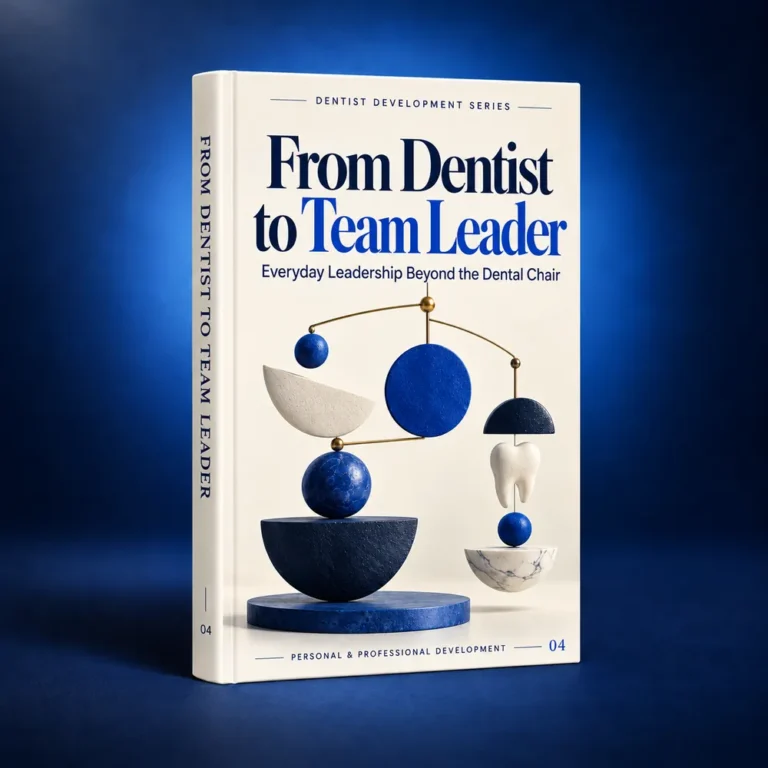
Good prompts for a peer are open and gentle: “What else might have been happening there?” or “What would you try differently?” Choosing your words is a skill in itself, and our guide to communication skills can help. If you are moving into a role with more responsibility, From Dentist to Team Leader is an ebook on that shift.
Three traps to watch for
Even a good habit can go wrong, and reflective practice for dentists is no exception. Watch out for these patterns:
- Self-punishment. If your notes read like a charge sheet, return to the facts and the next action.
- Endless analysis. Allow one action per event, then close the book.
- Learning without doing. Check your earlier actions each week and see which ones you actually tried.
Reflection is a learning tool and it has limits. If thinking about work leaves you persistently low or stuck in worry, please speak to a qualified professional, who can offer support that a notebook cannot.
Your next step: reflect on one moment this week
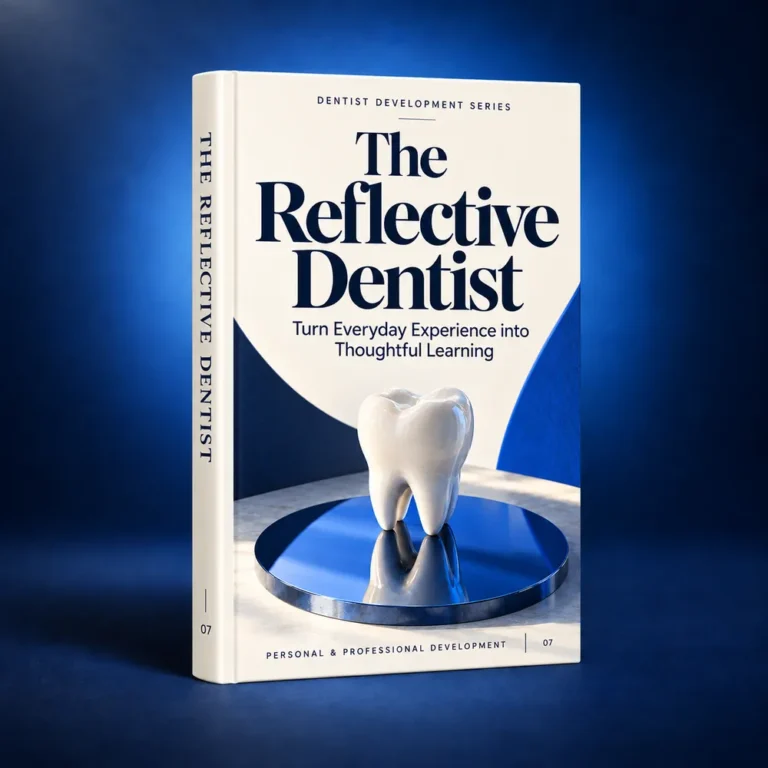
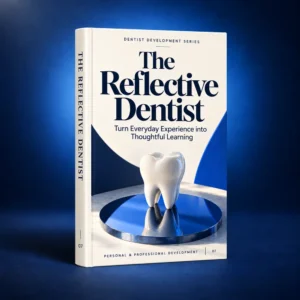
Choose one recent event, ask the six questions and write down a single action with a day beside it. That is a real start, and it takes less time than the drive home. To explore reflective practice for dentists in more depth, take a look at The Reflective Dentist, our ebook on turning everyday experience into thoughtful learning.