Daily Habits for Dentists: Small Routines That Survive a Busy Clinic
Big routines rarely survive a running-late schedule. Here is how to attach very small actions to moments already in your clinic day, shrink them on bad days and keep them going for the long term.
On this page (9)
In short
- Attach each new habit to an event that already happens every working day.
- Give every habit a normal version and a two-minute version for bad days.
- A single missed day is not a failure, so return to the routine the next day.
- Work on one habit at a time and review it briefly once a week.
Daily habits for dentists work best when they are small enough to survive the day you actually get. A morning that begins with a late arrival and a ringing phone will flatten any routine that needs quiet time. This guide shows how to attach tiny actions to moments already in your clinic day, so they keep happening when the schedule refuses to cooperate.
Why ambitious routines collapse by Wednesday
Most of us design routines on a Sunday evening, when the week is still imaginary. Then Monday brings a colleague off sick, a full recall list and a lunch break that shrinks to ten minutes. Any plan that depended on a free hour is the first thing to go.
The problem is rarely discipline. It is scale. A twenty-minute journaling ritual asks for time a running-late schedule will not give you, while two minutes of the same thing might still fit. The strongest daily habits for dentists are often the least impressive ones to describe at a dinner party.
Small Habits for Busy Dentists
$19.00 · Instant download
What research says about how habits form
A habit is a behaviour set off by a cue rather than by a conscious decision. The British Psychological Society describes a study by Lally and colleagues in which volunteers repeated one new behaviour each day, tied to a daily cue. Reaching peak automaticity took 66 days on average, with a range from 18 days to a predicted 254 days.
Two findings matter when you plan daily habits for dentists. Each behaviour in the study was linked to a daily cue, so pick an event that happens every working day. A single missed day also had little effect on later progress, although many missed repeats lowered the level people finally reached.
The volunteers were students reporting on themselves, so treat those numbers as a rough guide. The useful message is patience. Expect weeks or months, and do not read one chaotic Tuesday as proof that you have failed.
Start with the anchors your day already has
Your working day is full of events that repeat without any effort from you. These are the best places to hang new daily habits for dentists, because the reminder is built in and you never have to remember to remember. Look for moments like these:
- Hanging up your coat when you arrive
- The morning team huddle
- Sitting down to finish your notes
- Walking to the staff room at lunch
- Shutting down your computer at the end of the day
Then write each new routine as one plain sentence: “After I hang up my coat, I will write down today’s priority.” That sentence removes the daily debate about when to do it. Good daily habits for dentists depend on this kind of clarity far more than on motivation.
$19.00 · Instant download
Seven daily habits for dentists that fit a real schedule
None of these needs a free hour, a new app or anything more than a pen. Treat the list as a menu and pick one. Trying all seven at once is the Sunday evening mistake again.
- A one-line intention. On arrival, write the one thing that would make today feel well spent.
- A huddle question. Ask one team member what would help them most today, then listen to the answer.
- A pause at the door. Before the next appointment, stop for a moment and leave the previous one behind you.
- A quiet start to lunch. Keep your phone in your pocket for the first five minutes of your break.
- One specific thank-you. Name something a colleague did well, such as calming a crowded waiting room.
- A two-line note. Record what went well and one thing to try next time. Our guide to reflective practice explains why this small act is worth keeping.
- A first task for tomorrow. Before you leave, write down where you will start next morning.
Make daily habits for dentists smaller on bad days
Every habit needs two sizes. The normal version is what you do on an ordinary day. The minimum version is what you do when you are running forty minutes late and the front desk needs you. Decide both in advance, because you will not make a calm decision in the middle of the rush.
- Normal: three lines of notes. Minimum: one word.
- Normal: a five-minute phone-free lunch start. Minimum: one minute.
- Normal: a thank-you in person. Minimum: a short message before you go home.
The minimum version counts as a win. Its job is to protect the cue and the identity behind it, so that daily habits for dentists stay alive through the hardest weeks. You can return to the normal size when the calendar calms down.

$19.00 · Instant download
Track lightly and review once a week
Tracking should take seconds. A paper card in your desk drawer with a tick for each day is enough, and it leaves nothing to log in to. If the tracking becomes its own chore, it will be the first thing you abandon.
Once a week, perhaps on Friday afternoon, ask yourself three questions:
- Which day was easiest, and what made it so?
- Where did the routine break, and was the cue the problem?
- Does this habit still matter to me?
Those answers can feed bigger plans too. If you enjoy working in longer stretches, a 90-day plan gives daily habits for dentists somewhere to point. Protecting your diary helps as well, and our article on time management looks at that side of the problem.
Bring the team into the routine
Some routines work better when other people expect them. If you ask a question at the huddle every morning, your nurse and receptionist soon start arriving with answers. The ritual stops relying on your memory alone.
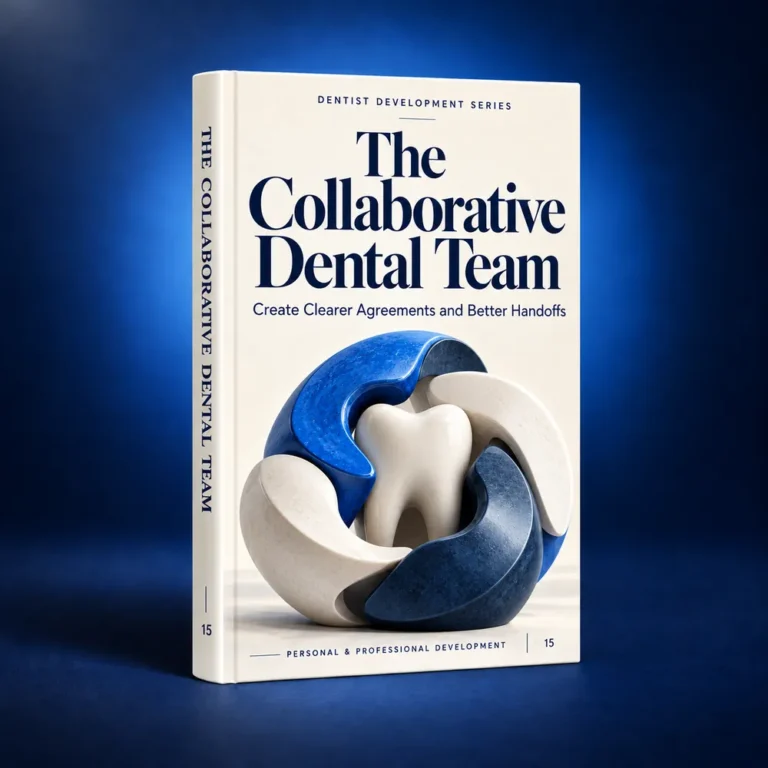
Invite people rather than instruct them. Explain what you are trying and ask whether they would like to join in. Shared daily habits for dentists and their teams should feel like an experiment, and The Collaborative Dental Team ebook explores this wider theme of working well together.
When a habit stops working
Sometimes a routine fades even after months of effort. Check the cue first, because a change of rooms or hours can remove it without you noticing. Move the habit to a new anchor before you decide it has failed.
If it no longer serves you, drop it without guilt. The aim of daily habits for dentists is a working life that fits your values, so a stale routine has no claim on you. Small routines also have limits. If you feel persistently drained or overwhelmed, please speak to a qualified professional.
Your next step: choose one habit today
Pick one action, one anchor and one minimum version, then write the sentence down before your next appointment. If you would like a companion for this work, Small Habits for Busy Dentists is our ebook on building routines that fit real working days, and it is a natural place to take your daily habits for dentists further.
Continue learning
All Dentist Development eBooks resources
$19.00

$19.00