Digital Detox for Dentists: Set Kinder Technology Habits
You do not have to abandon your phone to use it more intentionally. These four simple boundaries fit around a dental workday and help you choose when technology gets your attention.

On this page (8)
In short
- A detox means setting limits, not quitting technology.
- Start by noticing your own patterns for one week.
- Choose four moments in the day to protect.
- Tell your team what to expect from you.
A digital detox for dentists sounds like something that requires a remote cabin and no signal. In reality, it can be as modest as leaving your phone in a drawer during lunch. The aim is not to reject technology, which runs much of modern practice life, but to decide when it gets your attention.
Think of how a typical day goes. You check messages between appointments, scroll through the team chat at lunch, answer an email from the sofa, and pick up your phone first thing in the morning. None of that is a disaster. It just tends to happen without anyone choosing it.
What a digital detox for dentists really means
Wikipedia defines a digital detox as a deliberate break from digital devices. A student guide from the American University in Bulgaria adds a useful nuance: it means setting boundaries around phone use instead of giving up technology altogether. It also notes that even a quick notification can break concentration.
That framing makes a digital detox for dentists far more realistic. You cannot switch off the schedule, the practice software or the group chat that tells you who is out sick. What you can do is shape your relationship with them, one small decision at a time.
A word of caution before we go further. Changing your habits may feel good, or it may feel awkward for a while, and results differ from person to person. If stress or low mood is a bigger concern, please speak to a qualified professional.

Digital Boundaries for Dentists
$19.00 · Instant download
Start with one honest week
The first step in a digital detox for dentists is to change nothing. Spend a week simply observing. Most phones will show you a screen time summary, so have a look without judging yourself. Keep a few notes on when you reach for the device and what prompted it.
Ask yourself a few plain questions:
- Which apps do I open out of habit, not need?
- At what points in the day do I reach for my phone most?
- Which messages truly need a quick reply, and which only feel urgent?
- What was I doing right before I picked it up?
You may find that a running-late schedule sends you to your phone in every spare minute, or that one group chat takes up most of your evening. Those details tell you where to begin, and a little honest observation goes further than a dramatic promise to change everything by Monday.
Four boundaries for a digital detox for dentists
Here are four moments in the working day worth protecting. Try one at a time, and keep what suits you. There is no prize for doing all four at once, because a digital detox for dentists is not a contest.
Boundary 1: The first thirty minutes. Try not to open email or social media as soon as you wake up. Once you read a message about a staffing gap, your head is already at work. Give yourself time to have breakfast and think about the day on your own terms. A cheap alarm clock can help if your phone doubles as your alarm.
Boundary 2: The gap between appointments. Those few minutes are tempting to fill. Try leaving your phone in the office and using the gap to stretch, drink some water, write up notes or chat with your assistant. If you must stay reachable, turn off everything except calls from the front desk.
Boundary 3: A proper lunch. Eat away from your screen at least a few days a week. Sit with a colleague, go outside, or simply eat without reading anything. Teams often notice when one person starts doing this, and a phone-free table can become a shared habit.
Boundary 4: A closing time. Pick an hour after which work messages wait until morning, and mute the group chats that do not need you. A simple end-of-day routine, such as writing tomorrow’s top three priorities, makes it easier to step away. Our article on work-life balance explores this kind of line in more detail.
$19.00 · Instant download
Tame your notifications first
If a digital detox for dentists could include only one change, make it this one. Notifications are other people’s priorities arriving on your wrist or your screen. Most of them can be turned off without any real cost, and the change takes about ten minutes.
- Turn off alerts for social media, shopping and news apps.
- Mute busy group chats and check them at set times.
- Move distracting apps away from your home screen.
- Use your phone’s focus mode during working hours and at dinner.
- Allow calls from a short list of people, so true emergencies reach you.
For more on protecting your attention at work, see our guide to time management and the ebook The Focused Dental Day, which stay close to the same subject.
Bringing your team along
A digital detox for dentists works better when the people around you know about it. If colleagues expect instant replies at 10 p.m., your new boundary will feel like a personal failing. A short conversation can clear this up.
In your next team huddle, suggest a few shared norms:
- Which channel to use for urgent issues and which for everything else.
- What counts as urgent, with one or two examples.
- When people can expect a reply outside working hours.
- Whether phones stay out of team meetings.
If you lead the practice, your behavior sets the tone. Sending emails at midnight quietly tells everyone that they should be awake too. Try scheduling them for the morning, and let people know that you do not expect replies out of hours.

$19.00 · Instant download
What to do with the time you get back
A digital detox for dentists leaves a small gap in the day, and the phone will happily fill it again unless something else is waiting. Decide in advance what those minutes are for. It does not need to be ambitious or productive.
You might read a few pages of a paper book, call a friend on the way home, or walk around the block before dinner. Some dentists may prefer to do nothing at all for a while, which is also allowed. Keep a book in your bag or a pair of walking shoes at the practice, so the alternative is as easy to reach as the screen.
When the habit slips
Every digital detox for dentists slips at some point. A busy week arrives, a family matter keeps you on your phone, and the old routine returns. That is an ordinary part of changing any habit, not evidence that you have failed.
Return to the smallest version of the plan: one phone-free lunch, or one evening with email closed. Our article on daily habits has more on building routines that survive a difficult week. Review your limits every month or so, because a digital detox for dentists should change along with your life and your job.
Your next step: pick one boundary for this week
Choose the boundary that seems easiest, not the most impressive. Put your phone somewhere out of reach tonight, or mute one group chat before you leave the practice. See how it feels after seven days, then decide what to keep.
To keep exploring this theme, the ebook Digital Boundaries for Dentists: Create More Intentional Technology Habits is a helpful next read. Consider it a gentle companion to your own digital detox for dentists, designed for people who want to keep their tools and choose their habits.
Continue learning
All Dentist Development eBooks resources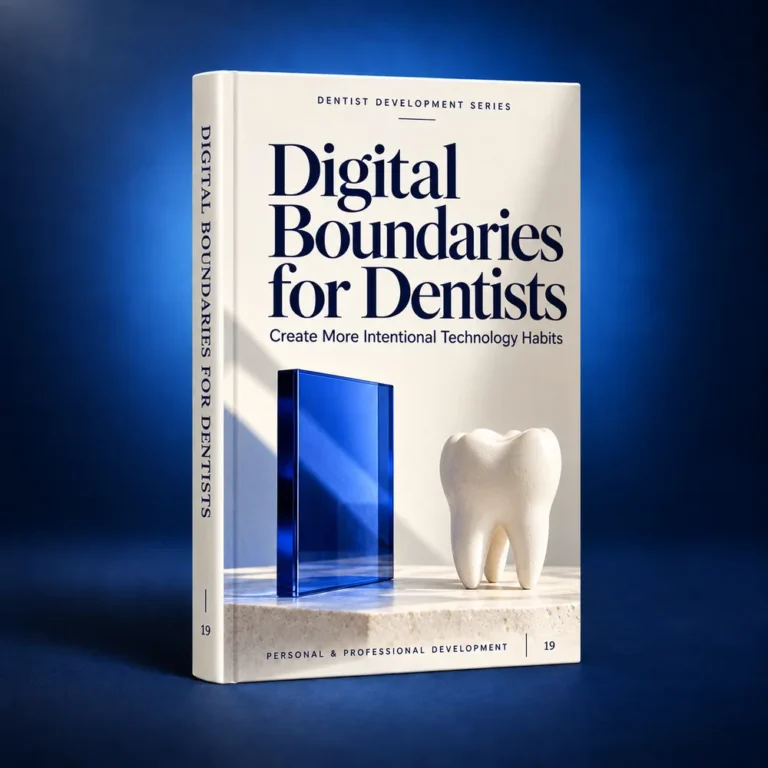
$19.00

$19.00