Dental Team Collaboration: Clearer Agreements, Better Handoffs
Most friction in a practice sits between people, where work passes from one person to the next. Learn how to map your handoffs, agree five working rules and make speaking up feel safer.

On this page (8)
In short
- Teamwork problems often sit in the handoffs, not in the people.
- Write down a few agreements rather than relying on unwritten rules.
- Close the loop: hand over, read back and confirm.
- Make it easy for anyone to raise a concern early.
Dental team collaboration is easy to admire and hard to pin down. You notice it most when it is missing: the front desk learns about a schedule change from an annoyed patient, two people order the same supplies, and a small misunderstanding turns into a week of frostiness. Usually nobody has done anything wrong. The gap sits between people, in the places where work passes from one person to the next.
Dental team collaboration happens in the gaps
A team can be full of capable, friendly people and still feel disjointed. That is why dental team collaboration depends less on how much everyone likes each other and more on what they have actually agreed.
Think about an ordinary patient visit. It passes from the person who books the appointment to reception, to the nurse, to the dentist, and back to the desk. Each of those moments is a handoff, and each one is a chance for information to go missing or for someone to assume a colleague already knows.
Two things cause a lot of quiet trouble here: assumptions and unwritten rules. Longer-serving staff carry the rules in their heads, while newer colleagues have to discover them by getting them wrong. Bringing those rules into the open is one of the most useful things a leader can do.
$19.00 · Instant download
Map the handoffs in your practice
Set aside part of your next team meeting and draw the working day on a whiteboard. Ask each person two questions: what do you need from the person before you, and what would make life easier for the person after you? The answers are often surprising, even in a team that has worked together for years.
Common handoffs to look at include:
- Reception to the chairside team, covering who is running late and who needs extra time.
- Dentist to front desk, covering what needs booking next and how long it will take.
- Morning to afternoon, covering any changes to the schedule.
- One part-time colleague to the next, covering anything left open.
- Practice manager to the team, covering decisions that affect everyone.
Resist the urge to fix everything at once. Choose the handoff that causes the most friction and start with that one. A single visible improvement does more for dental team collaboration than a long list of good intentions.
Five agreements worth writing down
An agreement is different from a rule handed down from above. The people who do the work help to shape it, so they have a stake in keeping it. Dental team collaboration tends to rest on five of them, and each can fit on a single page.
1. Who owns what. Name one owner for each recurring task, from the stock order to the recall list. Shared ownership often means nobody quite owns it. If a task needs to move, our guide to delegating clearly can help.
2. How information travels. Choose where messages live, whether that is a shared board, a practice system or a notebook at the desk. A note left on one person’s phone is not a handover.
3. How we use the huddle. Keep it short and predictable. Cover today’s pinch points, who needs help, and one thing to be aware of. Save long discussions for another time.
4. How we raise concerns. Agree that anyone can flag a problem, at any level, and agree how: a quiet word, a set phrase, or a slot in the meeting.
5. How we disagree. Differences of opinion are healthy when they stay in the right place. Discuss them privately or in the meeting, then give patients one consistent message.
$19.00 · Instant download
A better handoff has three parts
Good dental team collaboration comes down to small exchanges done well. A spoken handover works best with three parts: hand over, read back and confirm.
- Hand over: “We’re running behind, so the next patient will need to wait. Could you let them know?”
- Read back: “Sure, I’ll let them know you’re running behind.”
- Confirm: “Thank you. I’ll tell you when we’re ready.”
It takes seconds and can feel a little formal for the first week. What it removes is the question of whether the message landed. It also gives newer colleagues a pattern to follow, which is a kindness when everyone is busy.
Make it safer to speak up
None of this works if people stay quiet. The idea of psychological safety describes the belief that you will not be punished or humiliated for speaking up with ideas, questions, concerns or mistakes. In a team, it means people feel able to take risks without being shamed by colleagues.
Dentists and practice leaders set much of this climate through small reactions. You can help by:
- Thanking the person who points out a problem, even at an awkward moment.
- Asking the quietest person in the room for their view first.
- Mentioning your own slips before you ask about anyone else’s.
- Staying curious when a question sounds like a criticism.
This does not mean lowering your standards. Clear expectations and respectful honesty sit together comfortably, and dental team collaboration needs both. For the words to use, see our article on communication skills, or read Better Conversations in Dentistry, our ebook on the subject.
$19.00 · Instant download
Protect dental team collaboration on hard days
Agreements get tested when the day goes wrong. Someone calls in sick, the schedule slips, and voices tighten. On those days, dental team collaboration depends on a quick reset more than a perfect plan. A thirty-second huddle at lunchtime can be enough: what has changed, who needs help, and what can wait.
Repair matters as well. If you snapped at a colleague, go back before the end of the day: “I was short with you earlier. That was about the schedule, not you.” A small repair like this stops a bad moment from becoming a lasting story.
Review your agreements each quarter
Written agreements go stale as people and systems change. Put a short review on the calendar every few months and ask what is working, what people have quietly stopped doing, and what needs rewording. Good dental team collaboration stays honest about that gap.
Share the page with every new starter on their first day too. It tells them how this team works, which is far kinder than leaving them to work it out. In this way, dental team collaboration becomes part of how the practice runs rather than something that relies on goodwill alone.
Your next step
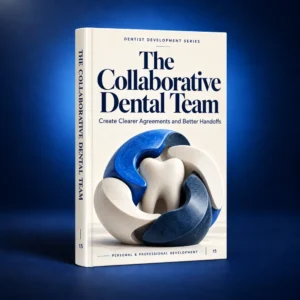
At your next huddle, ask the team which handoff causes the most friction, and agree one small change for a week. For more on this kind of dental team collaboration, The Collaborative Dental Team is our ebook on creating clearer agreements and better handoffs.
Continue learning
All Dentist Development eBooks resources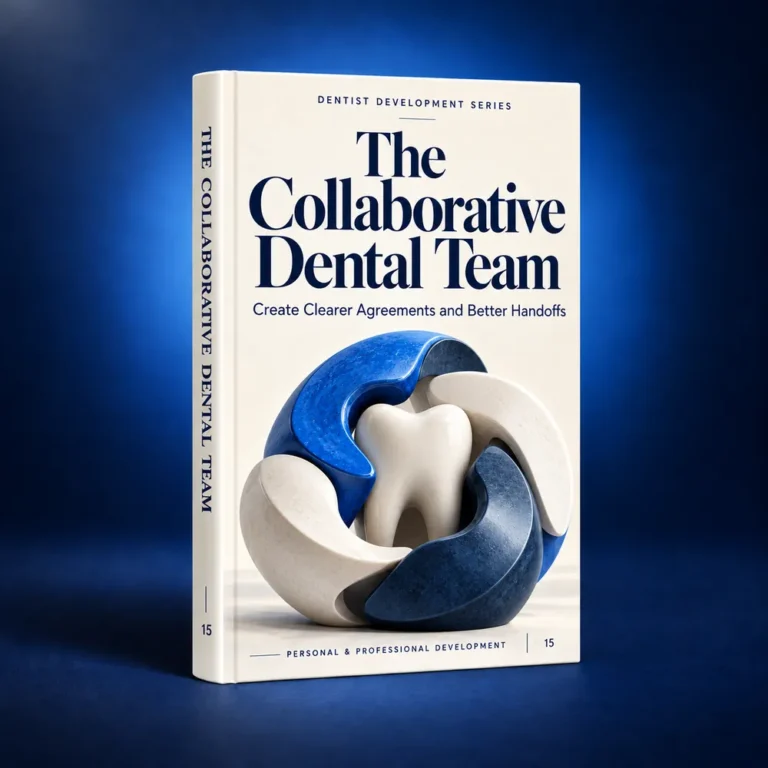
$19.00
$19.00