Communication Skills for Dentists: Listen, Explain, Connect
Every good conversation has three parts: listening, explaining and checking. These five habits help dentists improve each part with patients, colleagues and the wider dental team.
On this page (9)
In short
- Most misunderstandings begin before you speak, so start by listening properly.
- Paraphrasing shows you heard the person and catches errors early.
- Plain words and one idea at a time make explanations easier to follow.
- Asking people to say it back tests your explanation, not their intelligence.
Strong communication skills for dentists are rarely about sounding polished. They show up in small moments: a nervous patient at the end of a long day, a receptionist who looks upset, or a new associate who nods but clearly has not followed. Each of those moments asks the same thing of you, which is to understand first and be understood second.
It helps to think of any conversation as having three parts: listening, explaining and checking. Most of us were taught plenty about the middle part and very little about the other two. This guide works through all three, with five habits you can try tomorrow.
Why Communication Skills for Dentists Are Worth Practising
Dentists spend their days talking, so it is easy to assume the talking takes care of itself. Yet experience alone does not always improve how we speak. Repetition can just as easily harden our habits, including the less helpful ones.
Treating communication skills for dentists as a craft changes things. A craft has parts you can name, practise and review. You can notice what you did in a conversation, try something slightly different next time and see what happens.
It also lifts a little pressure. A conversation that went badly is not proof that you are bad with people. It is one attempt, and the next one is only a few hours away.
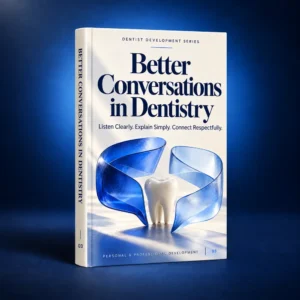
Better Conversations in Dentistry
$19.00 · Instant download
Habit 1: Listen to Understand, Not to Reply
Listening is the first of the communication skills for dentists, and it is harder than it sounds. While someone is speaking, many of us are already preparing an answer. The other person can usually tell.
The open textbook Student Success describes active listening as being engaged as a listener, not just hearing the words. Its advice is simple: avoid distractions, do not interrupt and hold back judgement unless your opinion is requested.
In a busy clinic, that might look like this:
- Turn away from the screen and face the person, even for thirty seconds.
- Let them reach the end of their sentence before you begin yours.
- Notice tone and body language, not only the words.
- Resist fixing the issue until you know what the issue actually is.
Habit 2: Say Back What You Heard
Paraphrasing feels awkward until you see how well it works. You restate what someone has told you in your own words, then let them correct you. It takes seconds and prevents a surprising number of crossed wires.
Imagine a patient says, “I just don’t know about all of this.” You could rush to reassure them. Or you could say, “It sounds as though you have some doubts. Is it the cost, the time, or something else?” The second response shows respect, and it gives you real information to work with.
The same move helps with staff. When a nurse says the afternoon was chaos, try: “So the changes to the list made it hard to get ready. Have I got that right?” Communication skills for dentists often come down to this one modest question.
Difficult Conversations, Clearer Outcomes
$19.00 · Instant download
Habit 3: Explain One Idea at a Time
Years of training give you a private language. It is efficient with colleagues and confusing nearly everywhere else. Explaining simply is not talking down to anyone. It is taking responsibility for being understood.
Before an important explanation, ask yourself what the one thing is that this person needs to take away. Start there. Then add detail in small steps, pausing long enough for a question to arrive.
- Swap technical terms for everyday words wherever you can.
- Use short sentences, especially when someone seems worried.
- Give the headline first and the reasons second.
- Stop talking sooner than feels natural, then wait.
Good communication skills for dentists include that last point. Silence can feel uncomfortable, but it is often the moment when a person works out what they really want to ask.
Habit 4: Check Understanding Without Testing People
“Does that make sense?” almost always gets a yes. People say yes to be polite, to avoid looking foolish or simply to bring the conversation to an end. It tells you very little.
A better check puts the responsibility on you. Try something like: “I have covered a lot, and I want to be sure I explained it clearly. What will you tell your family when you get home?” The answer shows you which parts landed and which need another go.
This works with teams as well. After agreeing a new process, ask a colleague how they plan to explain it to the rest of the staff. Used this way, communication skills for dentists protect everyone from the slow confusion that follows a meeting where everybody nodded.
$19.00 · Instant download
Habit 5: Keep Respect in the Tense Moments
Anyone can communicate well on a calm morning. The real test comes when you are running late, someone is unhappy or a staff conversation starts to feel tense. Your tone tends to change first, often before you notice.
A small routine can help. Pause for one breath, lower your pace and name what you can see without blame: “I can tell this has been frustrating.” Then return to Habit 1 and listen. If you need more support here, our guide to difficult conversations for dentists goes further, and Difficult Conversations, Clearer Outcomes is a companion ebook on the same theme.
Respect does not mean agreeing with everything. You can hold a clear position and still leave the other person their dignity. People tend to remember how a conversation felt long after they forget the details. Our article on emotional intelligence for dentists explores why your own reactions matter so much here.
How to Practise Communication Skills for Dentists This Week
Trying to change everything at once rarely works. Choose one habit and one setting, then give it a week. You might practise paraphrasing with your team only, or try the new checking question at the end of one conversation a day.
A short review at the end of the day keeps the practice honest. Three questions are enough:
- Where did someone seem to feel heard today?
- Where did I talk more than I listened?
- What is one phrase I would like to use tomorrow?
You can also ask a trusted colleague to watch for one specific thing, such as how often you interrupt. Direct feedback like this builds communication skills for dentists faster than guessing how you come across.
Better Conversations Build Quietly
Nothing here needs a personality change. Quiet dentists can be excellent listeners, and talkative ones can learn to leave more space. Communication skills for dentists work best when they sound like you, only clearer and a little more patient.
Do not expect every conversation to go well. Some people will stay upset, and some explanations will still miss. What you can control is the care you bring to your side of the exchange, and that care tends to show.
Your Next Step: Pick One Conversation
Choose one conversation you know is coming tomorrow, and decide which of the five habits you will bring to it. Small, deliberate practice is how communication skills for dentists keep improving long after training ends.
If you would like a companion for that practice, take a look at Better Conversations in Dentistry: Listen Clearly. Explain Simply. Connect Respectfully., our PDF ebook on everyday communication at work.
Continue learning
All Communication Skills resources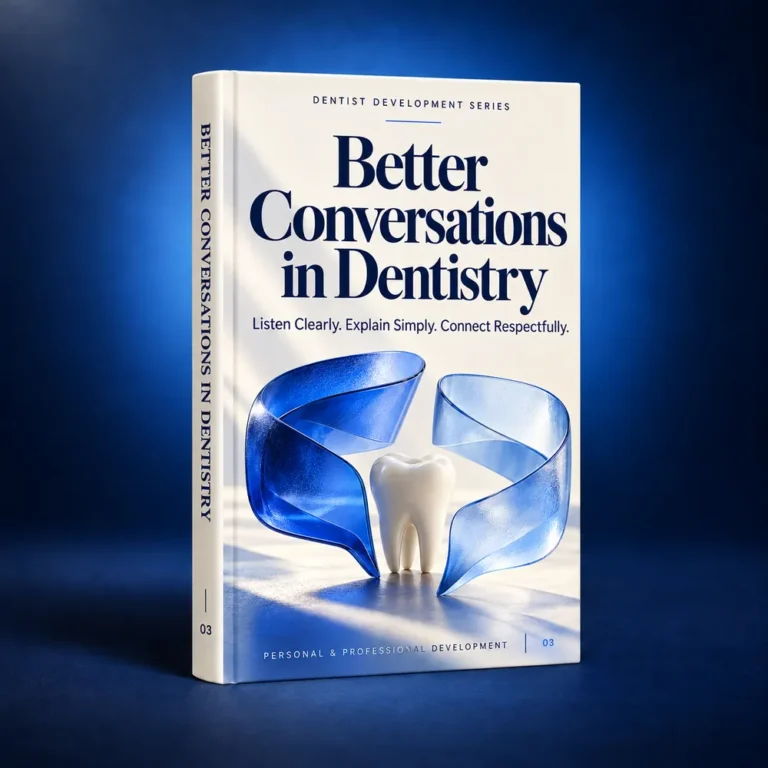
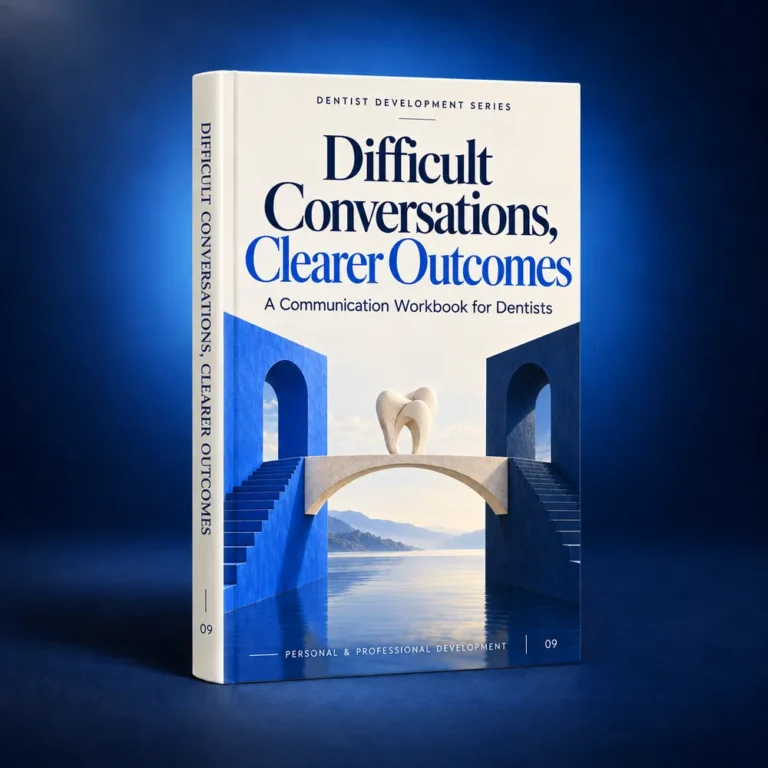
$19.00
$19.00