Dental Suturing and Extraction Courses: Plan Your Skills Training
Use dental suturing and extraction courses to prepare for supervised skills training. Build a study log, simulation goals and a feedback checklist.
On this page (12)
Dental suturing and atraumatic extraction are everyday surgical skills, and both improve quickly with deliberate practice. This guide shows how to plan your learning.
Recorded dental suturing and extraction courses can help you prepare for practical education, but preparation and performance are different stages. A useful study plan connects what you watch with supervised feedback, appropriate simulation and an honest record of what you can explain.
This guide focuses on organizing that learning. It does not teach extraction techniques, suture placement or other clinical procedures.
Decide which learning problem comes first
You may need to recognize the terminology used in a skills session, understand the purpose of instruments, or follow the reasoning in a teaching case. Define that need before choosing a course.
A broad goal such as “get better at surgery” is difficult to evaluate. A narrower goal such as “understand the terms used in my supervised suturing session” gives you a clear starting point and a way to review progress with an instructor.
Compare the two course subjects separately
Dentcademy lists Implant Ninja’s Suturing Masterclass and Implant Ninja’s Extraction Course. They address related areas of oral surgery education, but their contents should be assessed independently.
For the suturing resource, inspect the stated audience, teaching format and practical background expected. For the extraction resource, inspect how the syllabus frames its subject and whether it matches your current formal training. Do not assume that purchasing both creates a complete surgical training programme.
Use the online course checklist to verify access arrangements, support, any assessment and the exact nature of a certificate if one is advertised.
Prepare a vocabulary and observation sheet
Before a supervised session, create a short sheet with unfamiliar terms, instrument names encountered in the material and questions about the presenter’s explanation. Record the lesson timestamp or chapter reference.
Keep an important distinction in your notes: “I observed this in the recording” is different from “I understand why it was done,” which is different again from “I have demonstrated this skill under supervision.” Use separate columns so that progress in one area does not disguise a gap in another.
Do not use a blog or recording to decide which procedure to perform on a patient. That decision belongs within qualified assessment and appropriate clinical training.
Agree on simulation goals with an instructor
If practical training is part of your programme, ask the instructor which models, equipment and exercises are appropriate. Do not improvise clinical practice based on a video. The instructor should define the exercise, its limits and the criteria used for feedback.
Your learning log can record the date, agreed objective, feedback received and the next supervised step. Avoid grading yourself only by speed or by resemblance to a finished demonstration. Those observations may miss the aspects the instructor needs to assess.
A useful question after feedback is: “What should I focus on in the next practice session?” One specific improvement is easier to work on than a general instruction to practise more.
Review reasoning as well as movement
When returning to a recording, focus on the explanation surrounding the action. What context does the instructor provide? Which assumptions are stated? What information would you need to ask about in a teaching discussion?
Make a distinction between questions answered by rewatching and questions that require a qualified person. Watching the same passage repeatedly is not a solution when the missing information is not present in the recording.
For broader context, our implant education pathway and soft tissue resource guide can help place a focused skills resource within a wider study plan.
Keep the learning record useful
At the end of a study cycle, summarize three things: concepts you can now explain, feedback you have acted on, and areas still requiring supervision. Keep references to the source material so that your notes remain traceable.
Can a recorded skills course replace supervised training? No. It can support preparation and revision, while practical competence requires appropriate supervision and assessment.
Do I need to buy instruments to follow the course? Check the provider’s requirements and your instructor’s guidance before purchasing equipment. A recording alone does not define a safe practical setup.
Explore Oral & Maxillofacial Surgery resources and choose the material that prepares you for the next appropriate stage of your education, with a clear plan for feedback.
Dental Suturing: 6 Skills to Master
- Instruments: needle holders, tissue forceps and scissors suited to dental suturing.
- Needles and materials: needle shape, size and resorbable versus non-resorbable sutures.
- Knots: secure, reproducible knots with correct tension.
- Techniques: interrupted, mattress, sling and continuous dental suturing.
- Flap closure: tension-free closure after grafting or implant surgery.
- Suture removal and healing: timing and assessment.
Implant Ninja — Suturing Masterclass
$199.00 · Instant download
Courses for Dental Suturing
The Suturing Masterclass covers dental suturing techniques step by step, with close-up footage that makes needle angles and knot sequences easy to follow.
Atraumatic Extraction
Preserving bone and soft tissue during extraction simplifies later implant treatment. The Implant Extraction Course shows sectioning, elevation and socket management. Good dental suturing then stabilises grafts and protects the socket.
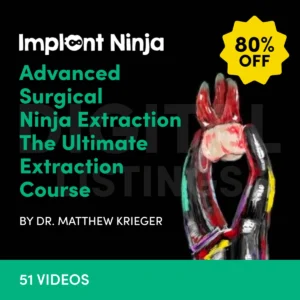
Implant Ninja — Implant Extraction Course
$199.00 · Instant download
How to Practise Dental Suturing
- Use a suture practice pad or animal jaws for repeated drills.
- Practise each knot until it is consistent with both hands.
- Time yourself and film your hands to correct movements.
- Repeat each dental suturing technique before using it on patients.
Ten minutes of daily dental suturing practice for a month makes a visible difference in surgery.

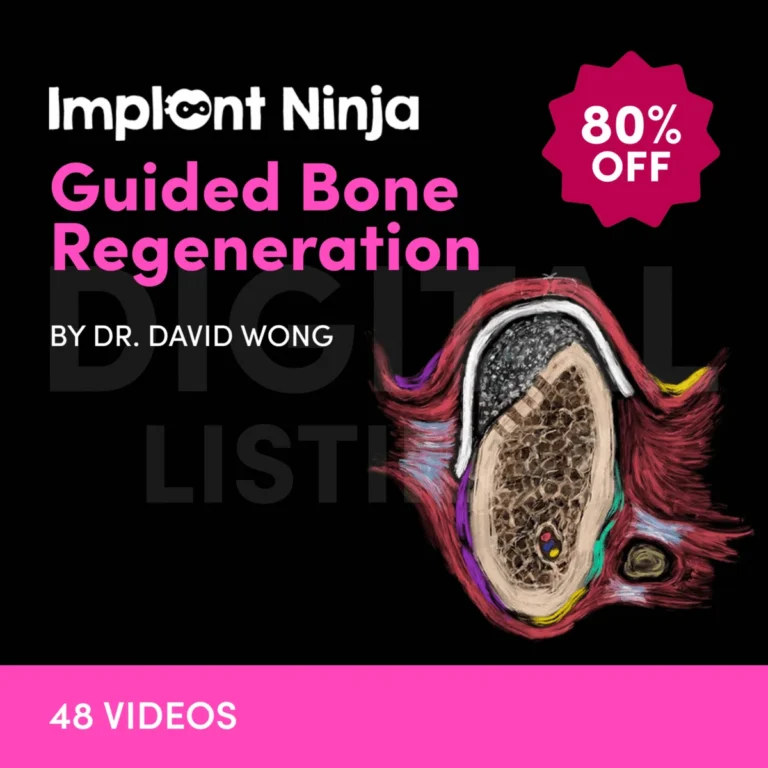
Implant Ninja — GBR (Guided Bone Regeneration)
$199.00 · Instant download
Common Mistakes
- Too much tension on the flap.
- Knots placed over the incision line.
- Inappropriate needle or suture size.
- Bites too close to the flap margin.
Frequently Asked Questions
Which dental suturing technique should I learn first?
The simple interrupted suture, then mattress and sling sutures for flaps and grafts.
Resorbable or non-resorbable?
It depends on the procedure and the follow-up plan. Courses explain the indications of each material.
Where can I learn more about oral surgery?
Professional bodies such as the ADA publish educational resources. See our oral surgery collection.
Continue learning
All Oral & Maxillofacial Surgery resources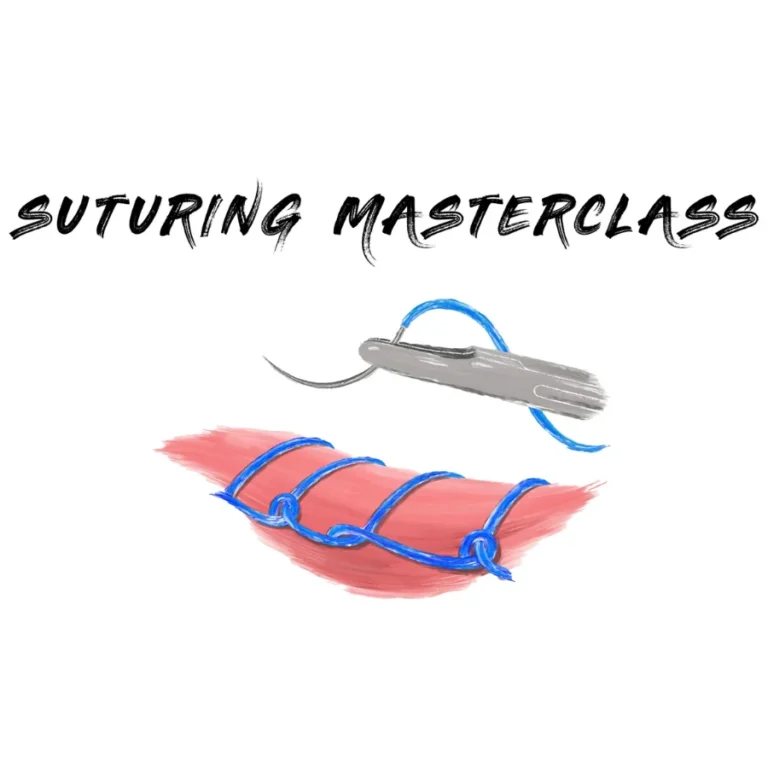
$199.00 $2,000.00Original price: $2,000.00

$199.00 $2,000.00Original price: $2,000.00
$199.00 $2,000.00Original price: $2,000.00

$199.00 $2,000.00Original price: $2,000.00