Confidence for Dentists: How to Build Steady Self-Assurance
Real self-assurance rarely arrives with a qualification. This guide shows dentists five practical ways to build it from everyday evidence, honest feedback and the right colleagues.

On this page (9)
In short
- Self-assurance is built from evidence you collect, not from telling yourself to feel braver.
- Choose next steps that stretch you slightly, so small wins keep adding up.
- Colleagues at your own stage are often more useful role models than famous names.
- Specific feedback teaches more than general praise, so ask for it directly.
Most advice on confidence for dentists tells you to stand taller and believe in yourself. That sounds fine until a colleague questions your plan in front of the team, or a new associate role leaves you second-guessing every conversation. A steadier kind of self-assurance comes from something more ordinary: evidence you have collected about what you can do.
This guide treats confidence for dentists as a skill you practise at work. It will not make every hard day easy. It can give you a clearer way to respond when doubt shows up, which it does for people at every career stage.
Why Pep Talks Fade by Tuesday
A motivating podcast on Sunday evening can feel wonderful. Then Tuesday brings a running-late schedule, a tense message from the front desk and a patient who wants a second opinion. The good feeling disappears because nothing underneath it has changed.
Psychologists use the term self-efficacy for your belief in your capacity to take the actions needed to reach a specific goal. The concept comes from Albert Bandura, and it is useful here for one reason. It is about specific actions, not your general worth as a person.
That distinction matters for confidence for dentists, because it takes pressure off. You do not need to feel confident about your whole career. You only need growing belief in a few particular things, such as leading a team huddle, answering a difficult question or disagreeing politely with a senior colleague.
$19.00 · Instant download
What Builds Confidence for Dentists at Work
Bandura described several sources of this belief, and three of them translate neatly into daily dental life. Personal success is the strongest. Watching someone similar to you succeed also helps. So does being encouraged by a person who is realistic about what you can manage.
Put together, those sources suggest a practical recipe. Do slightly harder things, stand near people a little ahead of you, and invite honest encouragement. The five habits below turn that recipe for confidence for dentists into something you can start this week.
Way 1: Keep an Evidence File
Memory is an unfair witness. After a long day, most of us remember the one awkward moment and forget the twenty conversations that went well. An evidence file corrects that imbalance.
Use a notes app or a small notebook. At the end of each day, write one line about something you handled well. Keep it factual and specific, because vague compliments to yourself are easy to dismiss.
- “Stayed calm when the afternoon list ran late and told the next patient why.”
- “Asked the nurse for her view in the huddle and used her idea.”
- “Said I needed to check something instead of guessing.”
Read it back before a situation that makes you nervous. You are not reciting affirmations. You are reviewing your own record, and a record is much harder to argue with.
$19.00 · Instant download
Way 2: Stretch by One Size
Personal success builds confidence for dentists, but only when the challenge is real and reachable. A step that is too easy proves nothing. A step that is far too big can leave you feeling worse than before, which Bandura’s work warns about too.
So pick the next size up. If speaking in meetings feels uncomfortable, offer one comment rather than volunteering to present. If you avoid money conversations, rehearse one sentence on fees and use it once this week. Our guide to handling difficult conversations can help you prepare for the harder ones.
Write down what you tried and what happened. Even a clumsy attempt counts, because it shows you survived the thing you were dreading. Over time, that record changes what you expect of yourself.
Way 3: Choose Role Models Who Look Like You
When it comes to confidence for dentists, conference stars can inspire you, but they are not always the most useful comparison. Research on self-efficacy suggests that models influence us more when we see them as similar to ourselves. That makes the colleague two years ahead of you especially valuable.
Ask that person how they handled their first year as an associate, or how they recovered from a bad week. Listen for the awkward parts, not only the happy ending. Hearing that someone like you struggled and carried on is often more reassuring than any polished success story.
This cuts both ways, so be careful with your feed. If scrolling through other dentists’ highlights leaves you feeling behind, mute a few accounts for a month and see what changes.
$19.00 · Instant download
Way 4: Ask for Feedback You Can Use
“How am I doing?” usually earns a polite “fine.” It tells you nothing, and it can leave a worried mind free to invent its own answer. Better questions are narrow and easy to answer honestly.
- What is one thing I did well in that meeting?
- When I explained the change to the team, what was unclear?
- If you were me, what would you do differently next time?
Choose people who are kind and candid, and ask at a calm moment rather than in the middle of a packed session. Then say thank you, even when it stings a little. Useful encouragement is realistic, and realistic encouragement is exactly what builds confidence for dentists over the long run.
Way 5: Plan Your Recovery Before You Need It
Every dentist has days that go badly. A patient complains, a colleague is short with you, or you replay one conversation all the way home. Confidence for dentists is not the absence of those days. It is knowing what you will do after them.
Try a short routine for bad days. Name what actually happened in one sentence. Separate the event from the story you are telling about yourself. Decide on one small action for tomorrow. Our article on reflective practice goes deeper into learning from experience this way.
If low mood or worry starts following you home most days, that deserves more than a routine. Speaking to a qualified professional is a sensible next step, and a thoughtful one.
Confidence for Dentists Is Quiet, Not Loud
Real self-assurance rarely looks like the loudest person in the room. It often sounds like “I am not sure yet, let me find out” said without embarrassment. Saying that takes more security than bluffing does.
So measure confidence for dentists in small, quiet ways. Perhaps you speak up sooner, or you stop apologising before every opinion. Perhaps you can hear criticism without losing the rest of your afternoon. These shifts are easy to miss, which is one more reason to write them down.
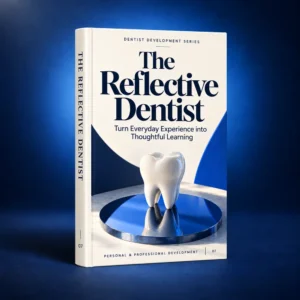
Building confidence for dentists is slow work, and that is good news. It means nobody is born finished, and nobody is too late to start. If you would like another companion for this work, The Reflective Dentist explores turning everyday experience into thoughtful learning.
Your Next Step: Start With One Line Tonight
Pick one way from this guide and begin today. The evidence file is the easiest place to start, because it asks for a single honest sentence before you go to sleep.
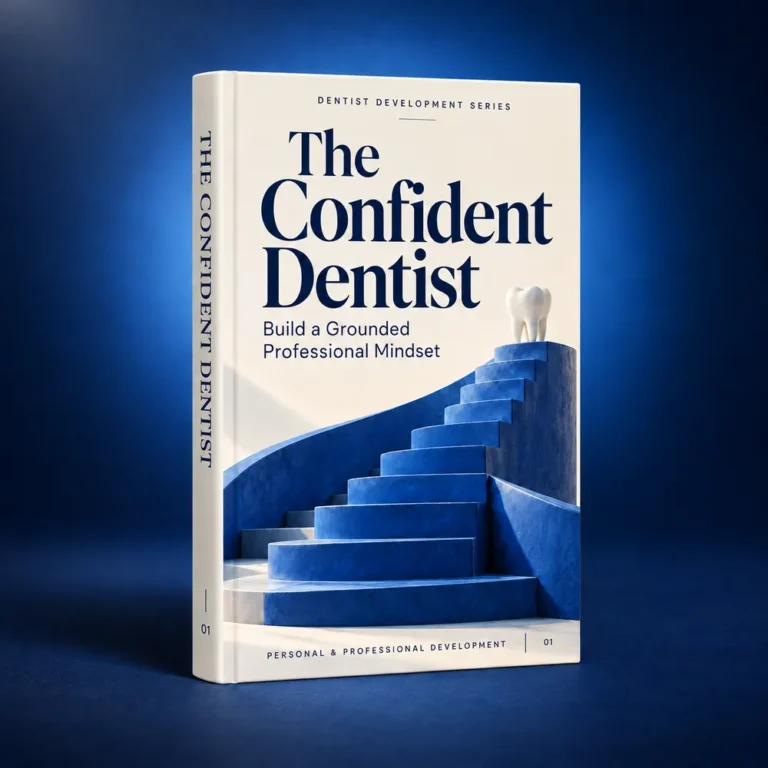
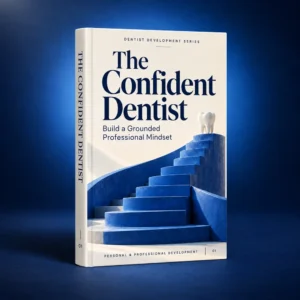
For a fuller companion, take a look at The Confident Dentist: Build a Grounded Professional Mindset, our PDF ebook on this theme. It is written for dentists who want confidence for dentists to mean something steady and realistic, not a performance.